New research highlights mobility as a driver of healthy aging and economic growth in super-aged societies
Reflecting on National Seniors Day in Canada and continuing our country's transition into a super-aged society, the Centre for Aging + Brain Health Innovation (CABHI), powered by Baycrest, is releasing its fifth AgeTech Insights Report, Building Communities for Healthy Aging: The Role of Mobility, Transportation, and Technology, to highlight the growing importance of mobility, transportation, and technology in supporting healthy aging, workforce participation, and economic resilience.
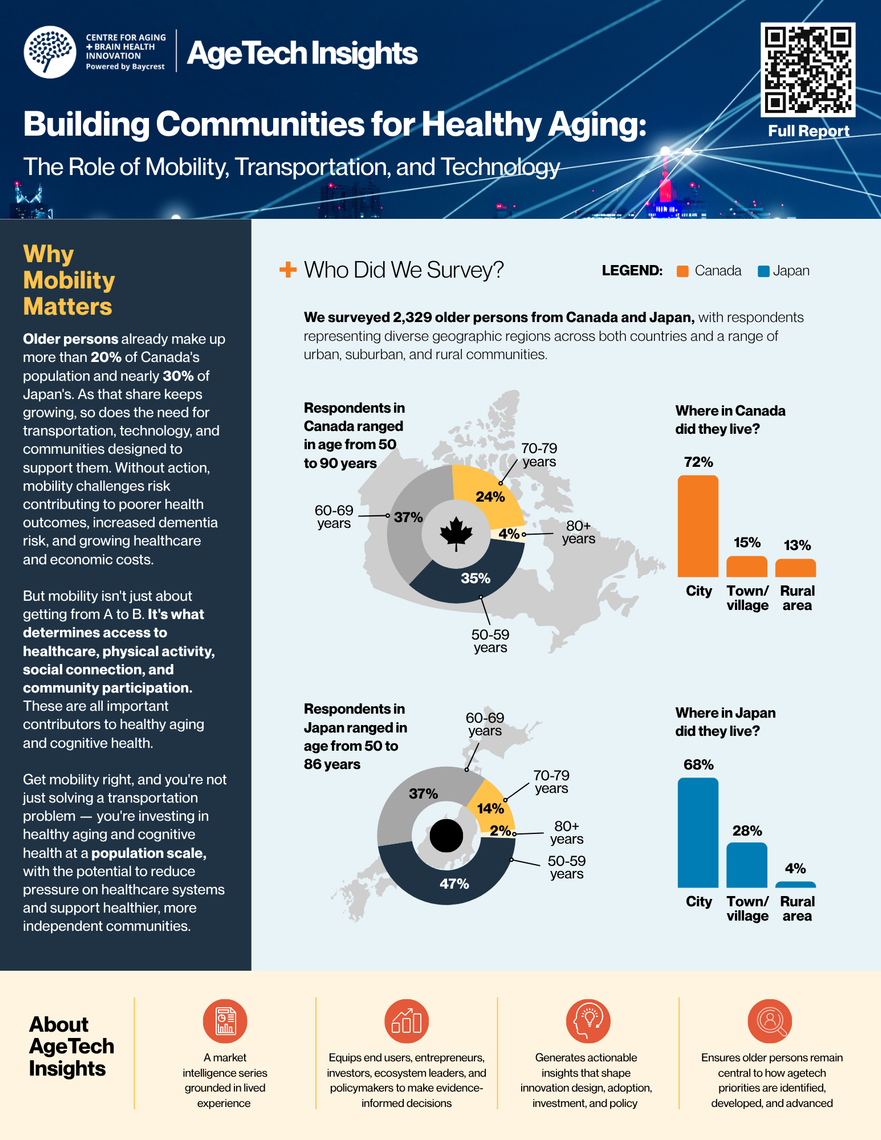
Drawing on insights from more than 2,300 adults aged 50+ across Canada and Japan, CABHI's fifth AgeTech Insights Report examines how older persons navigate their communities, access transportation, and use technology to maintain independence and quality of life.
The findings reveal that mobility (an individual's ability to move safely, confidently, and independently within their community and across different environments, with or without assistive devices) is a key enabler of healthy aging, leading to healthcare access, social connectivity, and workforce productivity. By supporting these lifestyle activities, mobility is key to addressing several modifiable dementia risk factors.
As Canada joins Japan among the world's super-aged nations, Building Communities for Healthy Aging: The Role of Mobility, Transportation, and Technology identifies key opportunities for innovators and policymakers to develop products and practices that support healthy aging, strengthen community participation, and unlock the potential of the growing longevity economy.
Developed in collaboration with partners across Canada and Japan, including the Ontario Ministry of Economic Development, Job Creation and Trade (MEDJCT), the Japan Research Institute (JRI), the National Center for Geriatrics and Gerontology (NCGG), and the Japan Agency for Medical Research and Development (AMED) Brain/MINDS 2.0, the report provides practical insights into how aging societies can use demographic changes as opportunities for both innovation and economic development.

Key findings
-
Mobility enables healthy aging
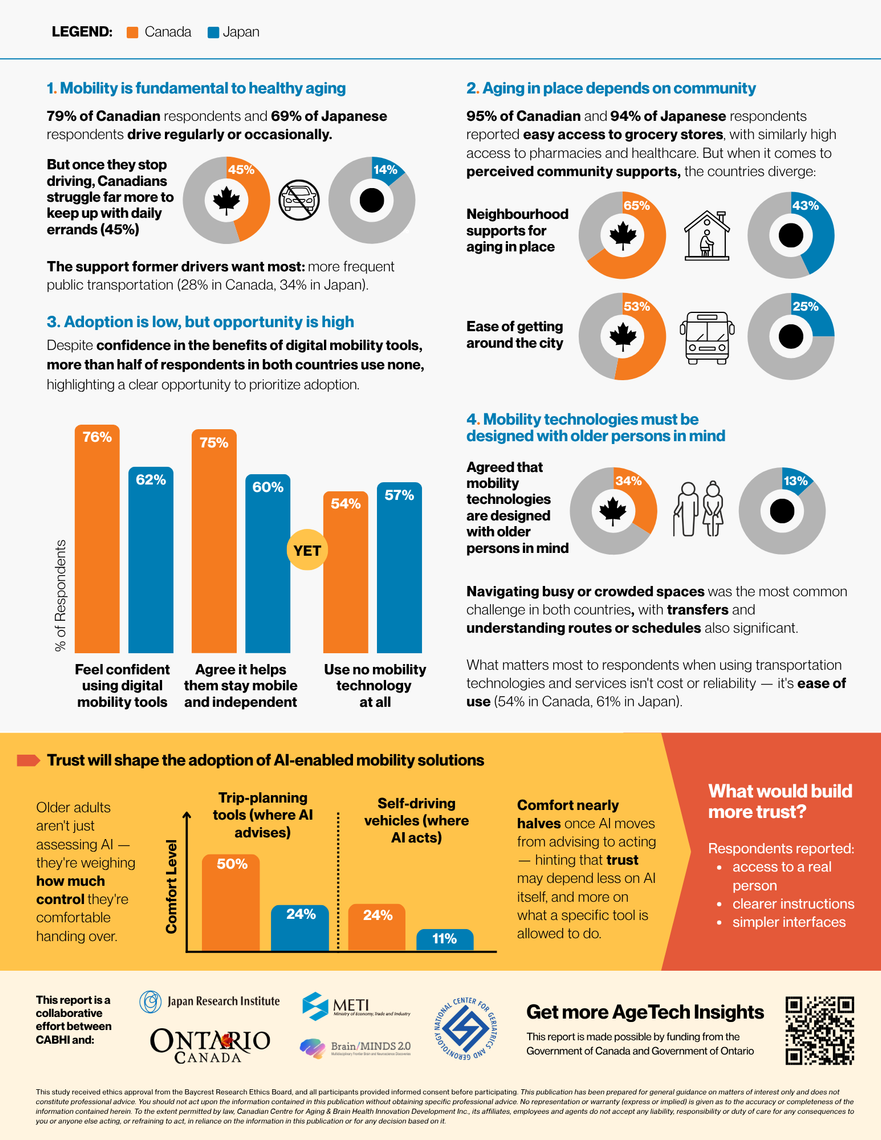
Mobility is fundamental to healthy aging, enabling older persons to access healthcare, essential services, employment opportunities, exercise facilities, and social opportunities that support independence and well-being: 79% of Canadian respondents and 69% of Japanese respondents reported driving regularly or occasionally to maintain these activities.
-
Aging in place depends on accessible communities
Aging in place depends on more than housing. Accessible transportation, walkable communities, and proximity to everyday destinations are essential to helping older persons remain active and connected.
-
Interest in mobility technology is high, but adoption has room to grow
While technology is widely viewed as a valuable tool for supporting mobility and independence, more than half of respondents reported not using technology for personal mobility, revealing a significant market opportunity to develop solutions that better align with the needs, preferences, and daily routines of older persons.
-
Usability is a top priority
Ease of use was the highest priority when using transportation technologies, reported by 54% of respondents in Canada and 61% in Japan, followed by reliability and affordability, underscoring the importance of intuitive, dependable design.
-
Technology should support humans, not replace them
Older persons want technology that supports their mobility and decision-making—such as navigation, safety, and driver-assistance tools—rather than technologies that replace human control, like fully autonomous vehicles.
-
Connected ecosystems are key
The future of healthy aging depends on connected ecosystems. Supporting independence will require coordinated investments across mobility and transportation systems, age-friendly communities, and technology and innovation.
Supplementary infographics