Falls are the leading cause of injury among older persons, making prevention a top priority. At Baycrest Terraces, care teams were hoping to gain insights into when residents were sleeping, waking, and preparing to leave their beds independently—a prime moment for falls.
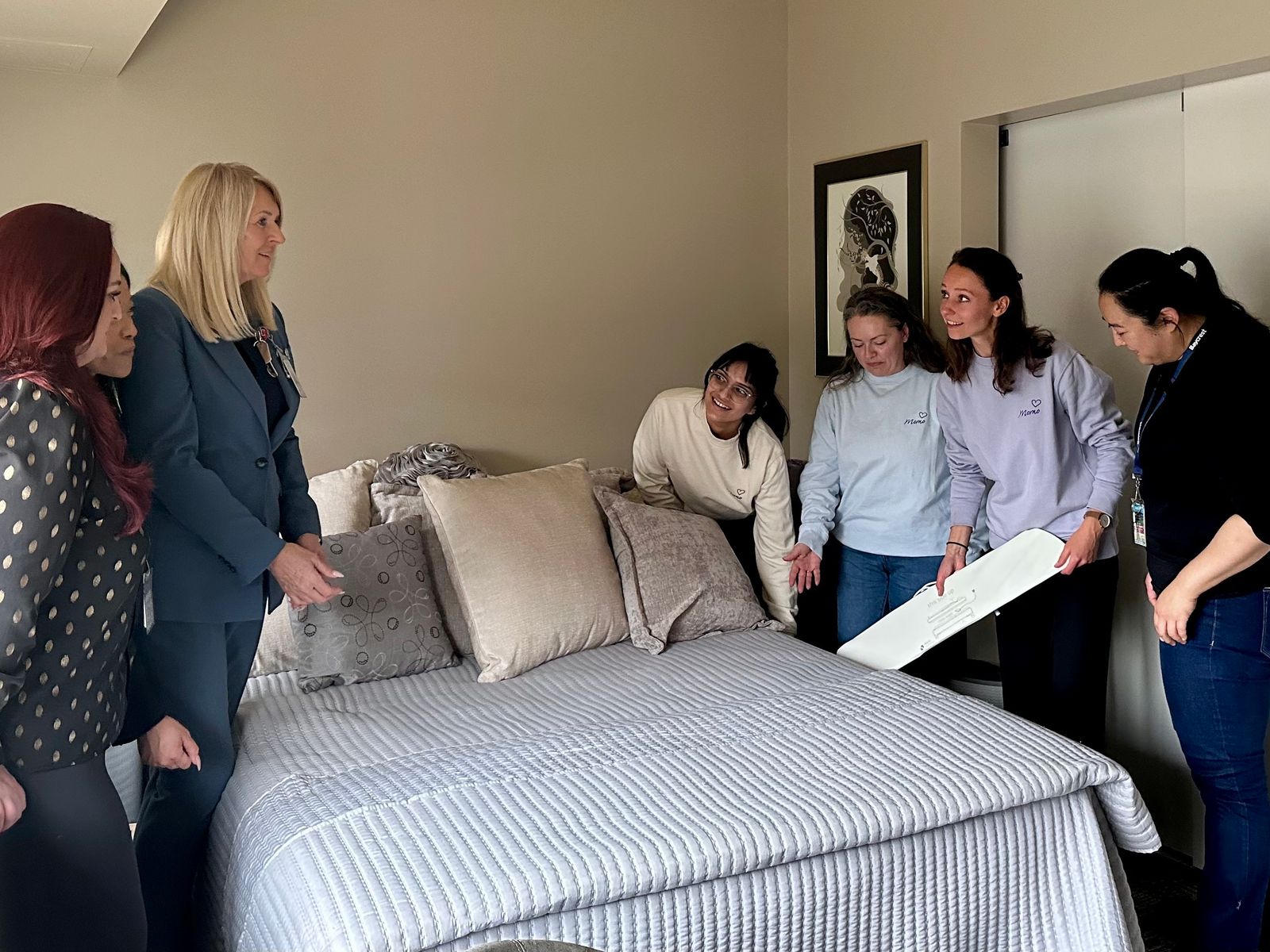
As one of the 26 2025/26 CABHI-supported D+A organizations, Baycrest Terraces is implementing Momo Medical’s BedSense (a CABHI-funded innovation): an under-mattress monitoring system designed to provide real-time insights into resident movement, heart rate, and breathing patterns. The technology alerts staff when a resident may be preparing to get out of bed, enabling early intervention when needed, but also promoting independence.
The pain point we’re trying to solve is to be able to have some insight into when people are sleeping, when they are in the bed, when they are out of the bed, but also we are trying to look for a noticeable reduction in falls. This will be a game-changer for people who are looking for that little bit of an extra touch of care while still allowing autonomy.
—Debra Conway-Chung, Director, Residential and Community Programs at Baycrest
BedSense stood out to Baycrest Terraces because of its non-intrusive design, ease of installation, and app-based reporting, which directly supports the organization’s strategic priorities related to both digital transformation and fall reduction.
The team at Baycrest Terraces expects to see a reduction in falls and an increase in valuable data collection around residents’ sleep and awake patterns. Not only will residents receive better, more customized care by using BedSense, but Baycrest Terraces will be able to schedule staff accordingly.