Exploring Dementia Prevention Through a Shared Responsibility Lens

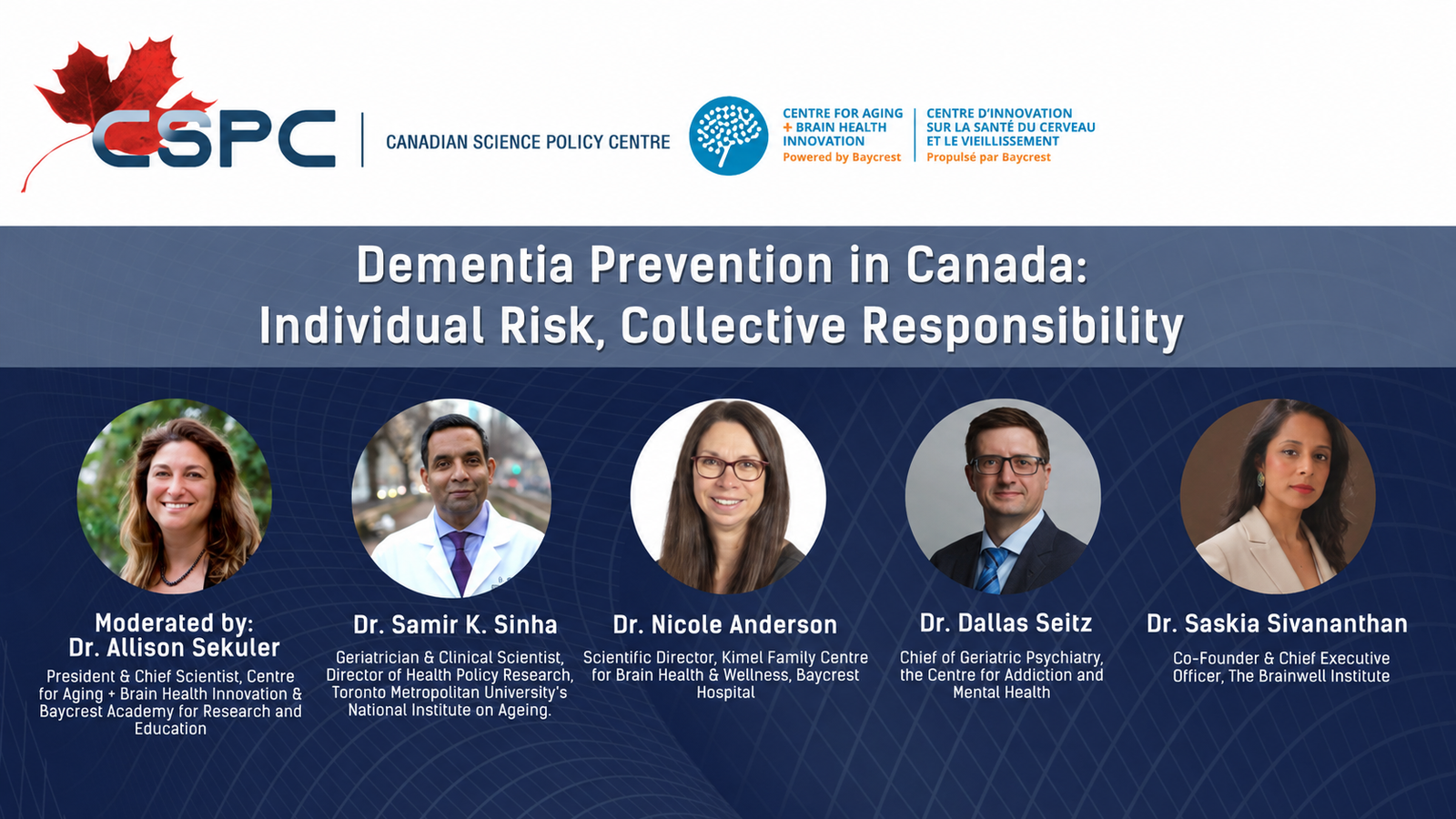
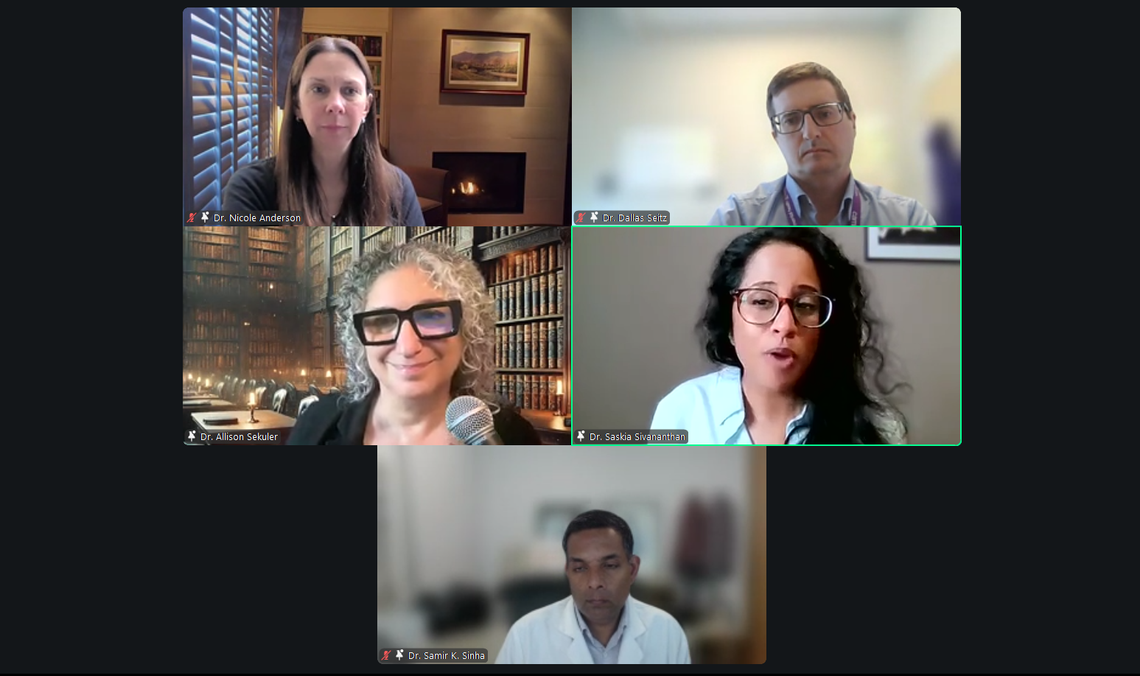
How can Canada support people in reducing their risk of developing dementia while ensuring the responsibility does not fall solely on individuals? CABHI, powered by Baycrest, explored this question during the virtual panel, Dementia Prevention in Canada: Individual Risk, Collective Responsibility, hosted by The Canadian Science Policy Centre (CSPC) and moderated by Dr. Allison Sekuler, President & Chief Scientist of CABHI and Baycrest Academy for Research and Education.

Events Blog |

Experts in aging, brain health, dementia care, and innovation came together to discuss how individuals, communities, healthcare systems, and governments can work together to support a more balanced and equitable approach to dementia prevention.

Key Takeaways:

  • Dementia prevention is a shared responsibility that benefits from diverse perspectives

  • Accessible supports are necessary for brain-healthy choices

  • Innovation and technology can strengthen prevention efforts

  • Cross-sector collaboration can advance efforts

Bringing Together Diverse Perspectives 

The panel welcomed together two of CABHI’s AgeTech Insights Fellows, Dr. Saskia Sivananthan, Co-founder and Chief Executive Officer of The Brainwell Institute, and Dr. Samir K. Sinha, Geriatrician and Clinician Scientist at Sinai Health System and Director of Health Policy Research at the National Institute on Ageing. Dr. Dallas Seitz, Chief of Geriatric Psychiatry at the Centre for Addiction and Mental Health and Professor of Psychiatry at the University of Toronto, and Dr. Nicole Anderson, Senior Scientist and Director of the Ben & Hilda Katz Interprofessional Research Program in Geriatric and Dementia Care and Associate Scientific Director of the Kimel Family Centre for Brain Health and Wellness at Baycrest, also joined the panelists as subject matter experts. 

Together, the panelists explored how Canada can help people reduce their risk of developing dementia while balancing individual responsibility with system-level supports, including funding, healthcare services, and community-based programs. 

Balancing Individual Action with Collective Support

A central theme throughout the conversation was the importance of balancing individual action with collective support. Panelists emphasized the need for personalized guidance that meets people where they are and recognizes that everyone's circumstances and needs are different.

The discussion highlighted the value of accessible, community-based programs that make it easier for people to engage in activities and behaviours that support brain health. Speakers also explored how technology can help support brain-healthy choices and empower people to take preventative action. 

This needs to be a societal approach, that also enables an individual approach to this.

Dr. Samir K. Sinha, Geriatrician and Clinician Scientist at Sinai Health System
and Director of Health Policy Research at the National Institute on Ageing

Understanding Barriers to Brain-Healthy Choices

The conversation also examined some of the challenges Canadians face when trying to make brain-healthy choices. Panelists noted that factors such as where people live, access to transportation and care, and broader social and economic realities can influence a person's ability to take preventative action. These discussions reinforced the importance of creating environments and support systems that make healthy choices more accessible for everyone.

Without solid access to primary care, it's really hard to make headway on prevention or management of these conditions.

Dr. Dallas Seitz, Chief of Geriatric Psychiatry at the Centre for Addiction and Mental Health
and Professor of Psychiatry at the University of Toronto

The Role of Innovation and Technology 

Technology emerged as another key theme throughout the panel. Speakers discussed how innovations, such as Intuition Robotics' ElliQ, can help combat loneliness and encourage greater physical and social activity, demonstrating the role technology can play in supporting brain health and fostering social connections. 

Thinking about brain health as a health issue is detrimental. This is a much broader issue and not just a health issue.

Dr. Saskia Sivananthan, Co-founder and Chief Executive Officer of The Brainwell Institute

Looking Ahead 

The discussion also touched on the broader societal and healthcare costs of dementia and the importance of taking action to help reduce its prevalence. Throughout the conversation, panelists emphasized the need for dementia prevention approach balance individual action with broader support systems.

The panel offered valuable insights into both the opportunities and challenges associated with dementia prevention in Canada. By highlighting the need for personalized support, accessible community programs, innovative technologies, and system-level action, the conversation reinforced that supporting brain health is a shared responsibility.

We need to approach it from all angles. Improving healthcare, improving community resources, improving federal investment. That's the only way that we'll get this done.

Dr. Nicole Anderson, Senior Scientist and Director of the Ben & Hilda Katz Interprofessional Research Program in Geriatric and Dementia Care and Associate Scientific Director of the Kimel Family Centre for Brain Health and Wellness at Baycrest

Creating meaningful change will require collaboration across individuals, communities, healthcare systems, and governments to make brain-healthy choices more accessible and achievable for all. 

Watch the full CSPC video to learn more about the what the panel discussed:

Get on the list

Want to stay up to date with CABHI events? Subscribe to our newsletter to get updates straight to your inbox!

Subscribe to the CABHI newsletter

* indicates required