Enabling Effective Disease Detection out of Carleton University

2026 Impact Report Programs Impact Blog Ignite Impact Story |

According to the World Health Organization, every day there are nearly 27,400 new dementia cases globally, translating to about one diagnosis every three seconds. With these staggering rates, early detection is key to delaying symptom progression and enabling more effective treatment plans. Unfortunately, many diagnoses occur only after significant cognitive decline has taken place. Dr. Ravi Prakash of Carleton University is working to change that.

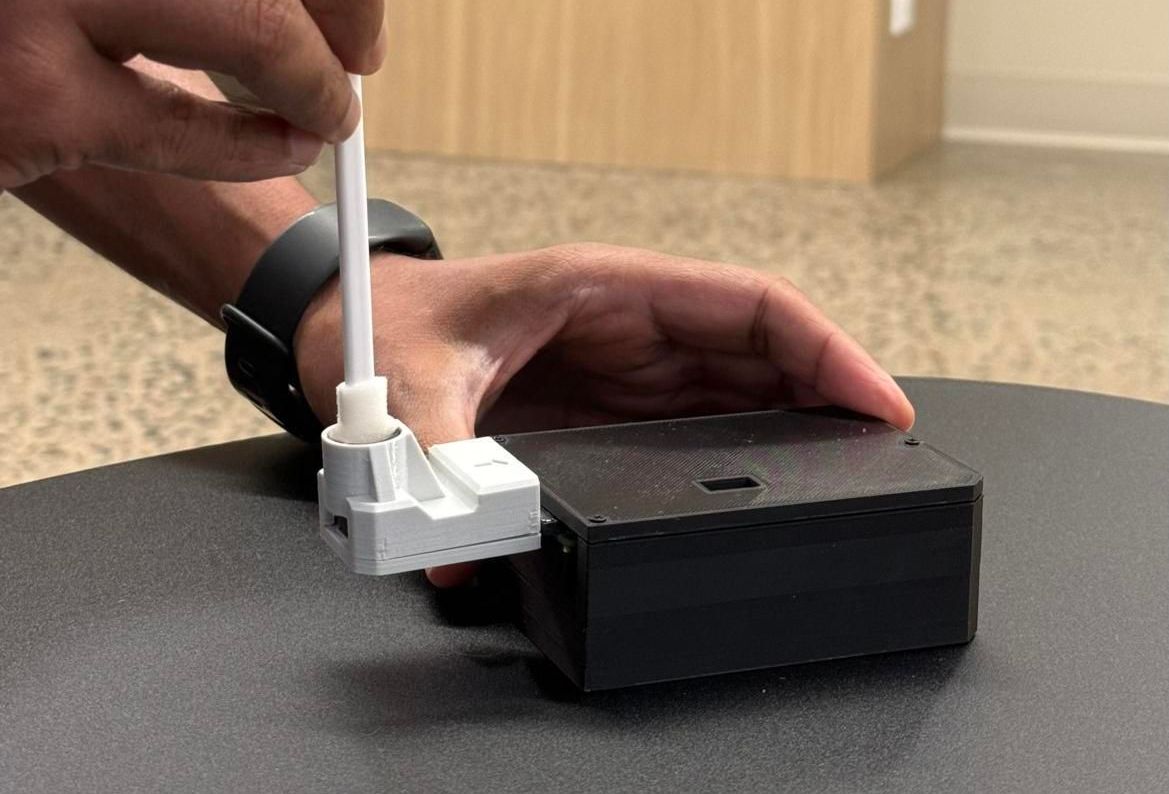
Dr. Prakash has developed a device capable of detecting Alzheimer’s disease biomarkers through blood and saliva samples—a more accessible, non-invasive, and cost-effective approach to disease detection. At a pivotal stage in the innovation journey, Dr. Prakash needed support to further evaluate and trial the solution; CABHI’s Ignite program helped bridge the gap between research and real-world impact.
CABHI’s support for the biosensor technology development and validation goes far and beyond the direct funding contributions. CABHI team offered peer mentorship through direct meetings with advisors and monthly webinars from experts through the Ignite Learning Series; they offered community engagement through their Leap end-user engagement service, which is invaluable for creating market-disrupting new technologies; and they offered timely guidance on the commercial pathway and future product implementations.

— Dr. Ravi Prakash, an electrical and biomedical engineer and lead researcher in Carleton University’s Organic Sensors and Devices Lab

Milestone 1

Pre-clinical validation

The team was able to obtain pre-clinical validation data to support that the bioanalyzer correlates protein biomarkers associated with Parkinson’s disease in low-volume blood and saliva.

Milestone 2

Early assessment of samples

Early assessment completed on the samples received from the COMPASS-ND biobank (CCNA) assessing the bioanalyzer’s performance in quantifying amyloid beta-42 in blood and saliva samples.

Milestone 3

Collection as part of pilot study

Completion of saliva collection and amyloid-PET scanning as part of an Alzheimer’s Canada- and CIHR-funded pilot study at the Institute of Mental Health Research and the Royal Hospital Ottawa. 

Milestone 4

Creation of H2OM Technologies

A start-up company, H2OM Technologies, was created, and a rapid pre-seed investment round was completed between October and November 2025, receiving support from seven highly curated investors and the IRV deep tech venture fund.

Milestone 5

Licensing and IP transfer agreement

A licensing and IP transfer agreement was executed with Carleton University in October 2025, granting H2OM an exclusive, worldwide license to the technology.

Milestone 6

Go-to market strategy development

A go-to-market strategy was developed focusing on two consumer health and wellness cartridges related to brain/body health and sleep/recovery.

Milestone 7

Patent filings

National phase patent filings completed, protecting the core technology in the United States, Canada, Europe (and Hong Kong), Japan, and India.

Milestone 8

Demonstration of technology

H2OM’s first consumer health and wellness cartridge form factor (alpha) was demonstrated in Ottawa to investors and stakeholders.

Subscribe to the CABHI newsletter

* indicates required