< Back to all News
CABHI showcases next generation of agetech innovators at dynamic pitch event
On Feb 10th, 2026, CABHI hosted an in-person pitch event featuring some of the brightest up-and-coming agetech innovators—all graduates of our NextGen Support Package program.
The event celebrated the incredible achievements of the 18 students and recent graduates comprising the second cohort of the program, which grows and fosters the next generation of innovators tackling pressing challenges faced today by older persons and caregivers.
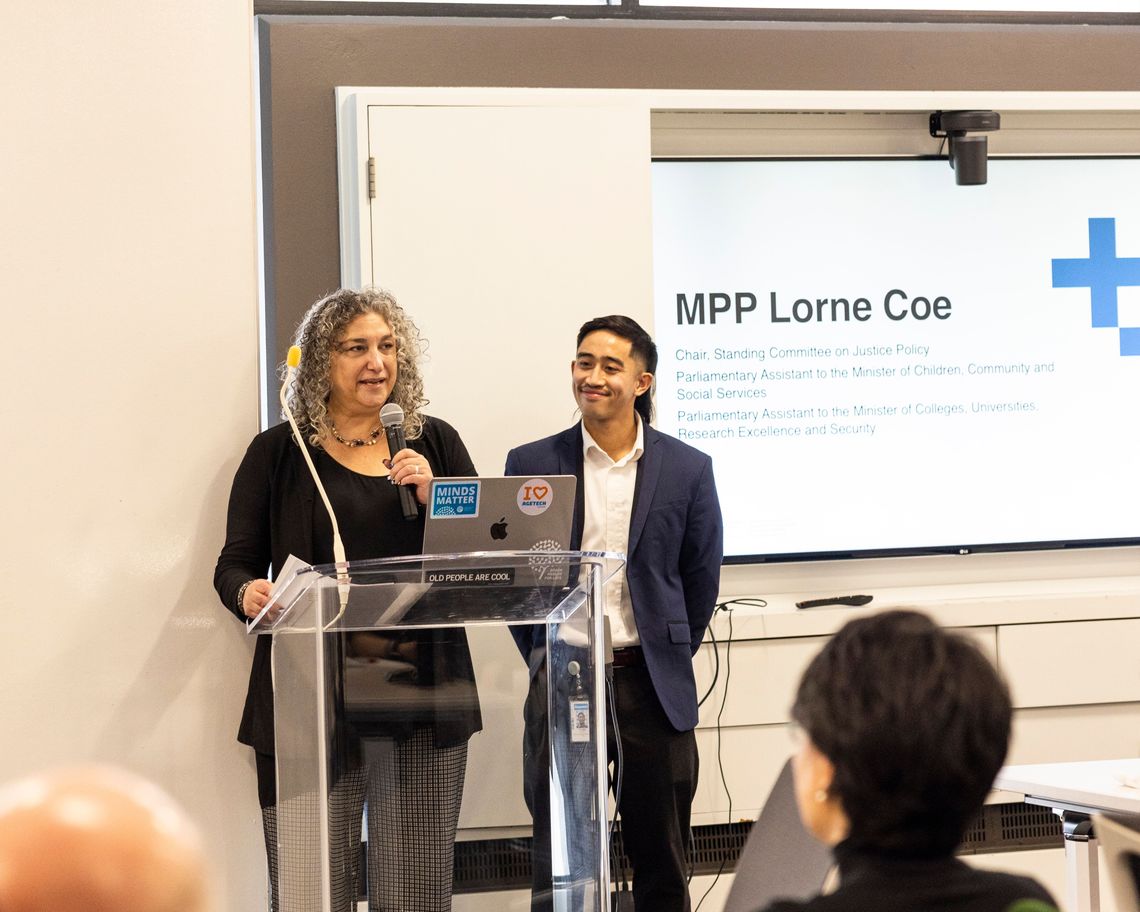
Lorne Coe (MPP Whitby and Parliamentary Assistant for the Ministry of Colleges, Universities, Research Excellence & Security) was in attendance to congratulate the eager young group, and to kick off the pitches
Research and innovation when it comes to aging has never been more important than it is today… One in three people in Ontario will be impacted by a brain disorder such as dementia or Parkinson’s disease in their lifetime… That’s why bold ideas and groundbreaking discoveries are so essential.
Lorne Coe (MPP Whitby and Parliamentary Assistant for the Ministry of Colleges, Universities, Research Excellence & Security)
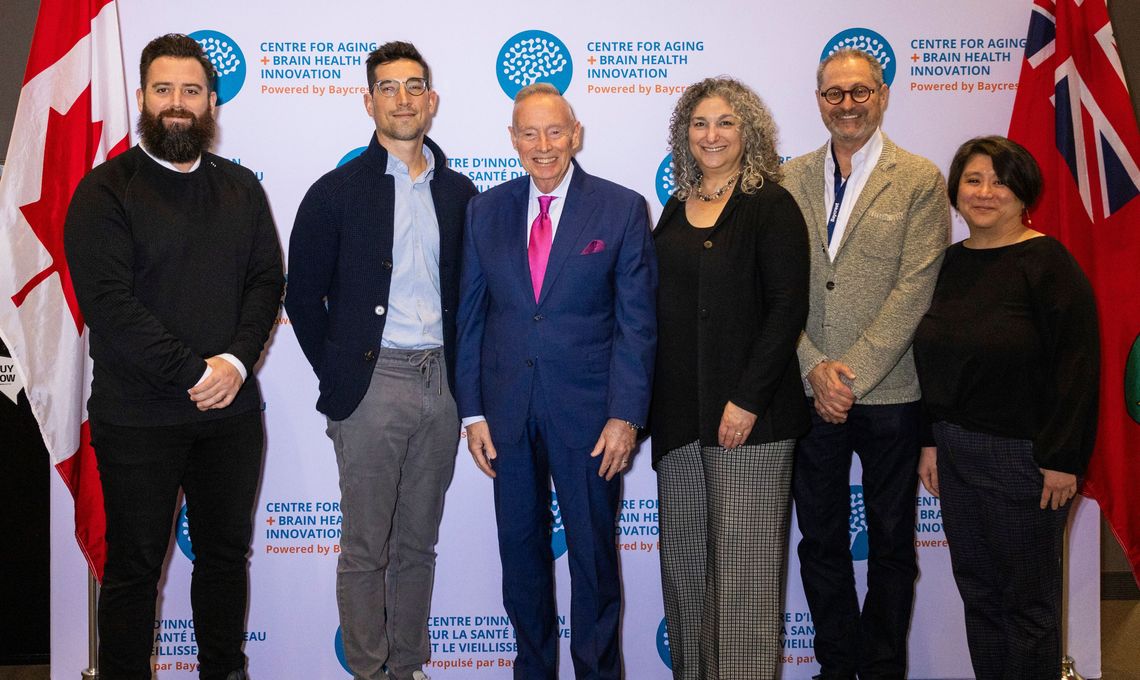
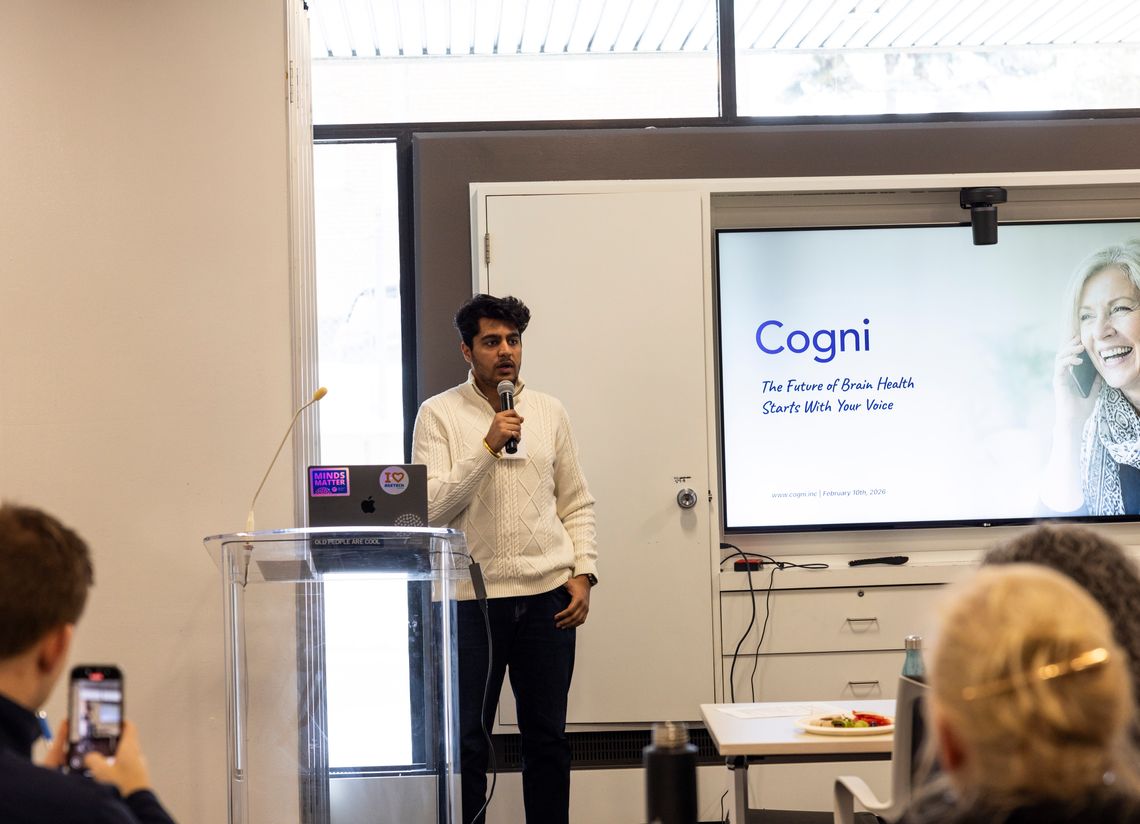
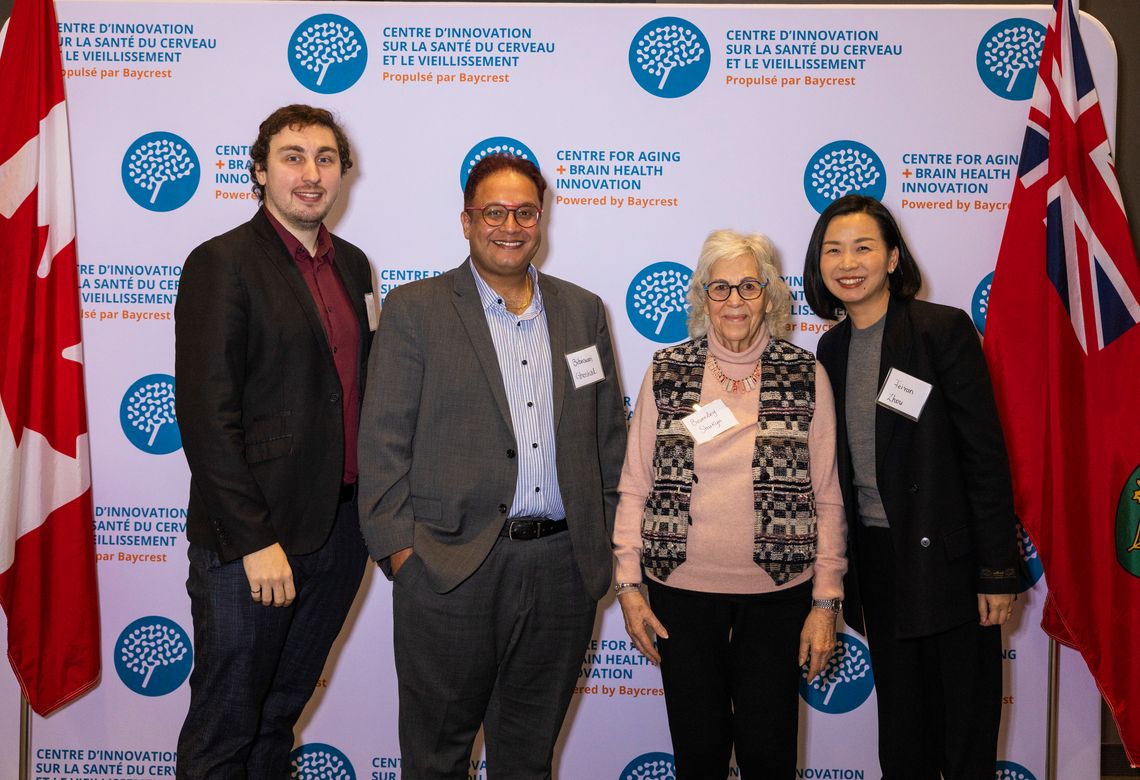
Over 40 people attended the pitch event, which included a panel of expert judges who evaluated six pitches and, after deliberating, awarded the prize for best overall pitch to Lucas Monter of NeuroSpritz Inc. and the People’s Choice to Yuvraj Walia of Cogni. Among the judges was Beverley Shukyn, a member of CABHI’s Lived Experience Council, which provides co-design consultation to our companies as part of our suite of acceleration services, ensuring that older persons’ lived experiences are reflected in solutions. Other judges were Bibaswan Ghoshal from OBIO, Feiran Zhou from Ontario Centre of Innovation, and Mark Aquilino from Epiloid Biotechnology.
Keren Etkin (Gerontologist, Entrepreneur, Author & CABHI AgeTech Insights Fellow)) congratulated the graduates from afar, sending a video address from overseas. Keren supported this NextGen cohort through The AgeTech Academy by providing a custom curriculum to build their innovation capacity.
NextGen Support Package, launched in 2025, provides comprehensive support and skill-building to students and recent graduates working on solutions that support healthy aging and brain health. Participants receive funding and participate in end-user research, networking, mentoring from industry experts, and educational programming—all designed to accelerate their innovations from idea to impact, by achieving research, development, testing and validation milestones.
“CABHI’s NextGen Support Package is an invaluable launchpad for young innovators motivated to tackle some really complex challenges experienced by older Canadians,” says Jon Suckling, Director of Programs & Strategy at CABHI. “It’s inspiring and humbling to be a part of their journey, and help them achieve so much, so early on in their careers.”
The second cohort of NextGen is listed below, along with a description of their projects.
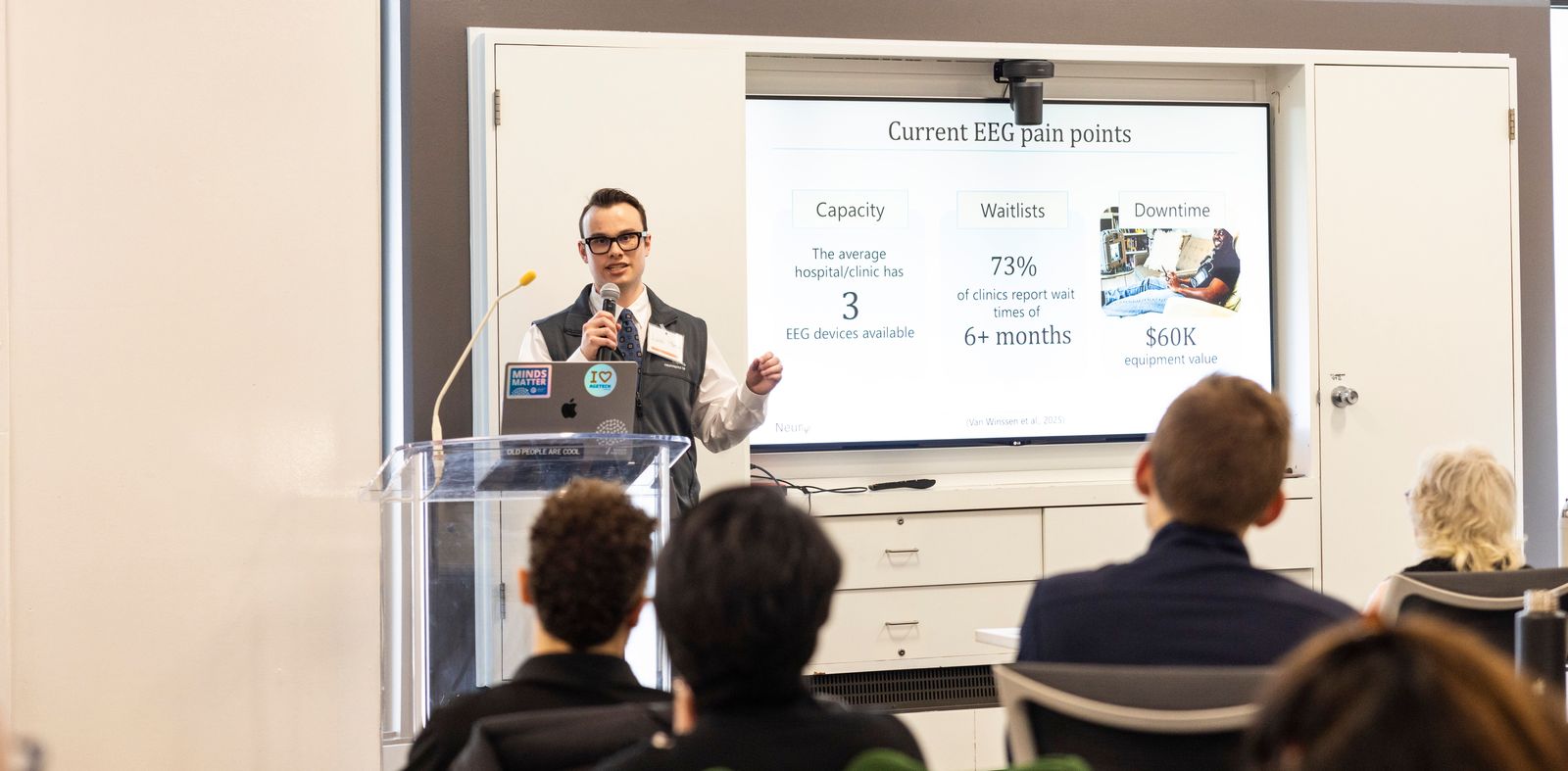
Lucas Monter of NeuroSpritz (Pitch competition winner): A novel device that automates EEG electrode placement using a robotic spray system guided by AI and LiDAR. It cuts setup time dramatically, increases clinic efficiency, and allows patients to move freely during monitoring.
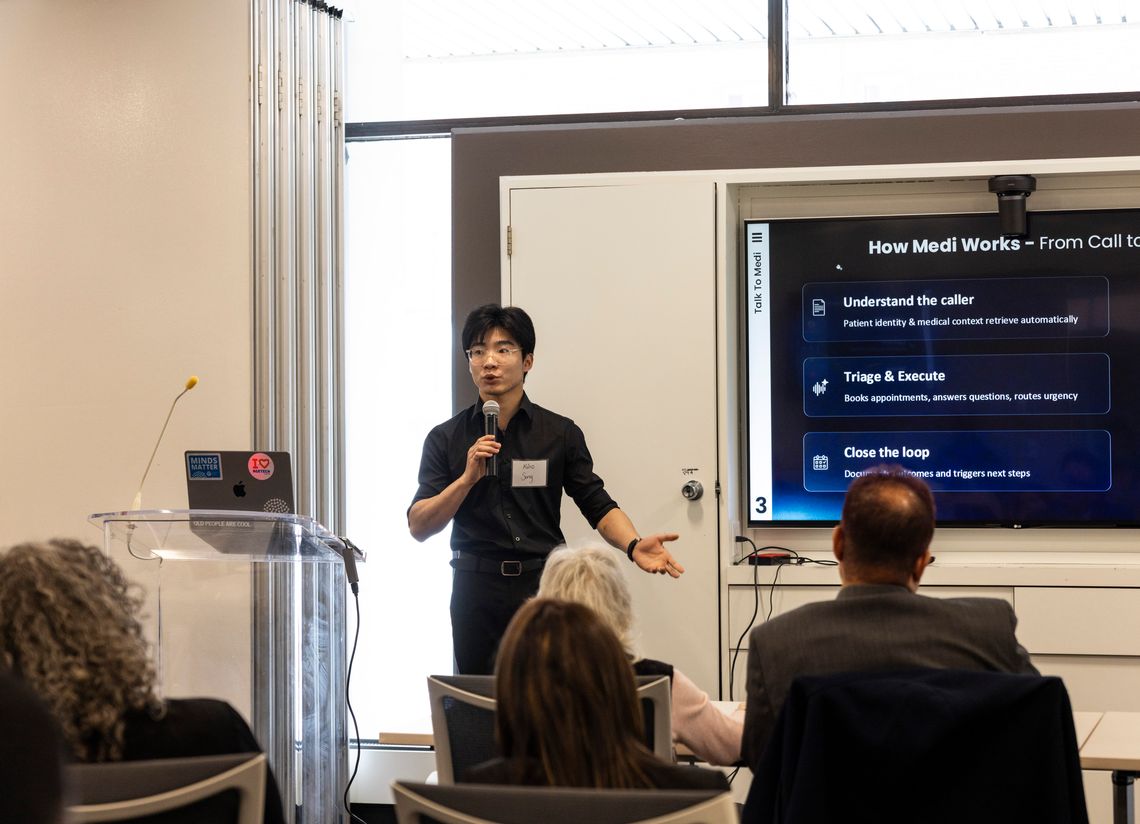
Kino Song of TalkToMedi / Medium AI (Runner-up): A voice-based healthcare assistant that automates patient scheduling, triage, and follow-ups. Integrated with EMRs, it reduces clinical workload and improves efficiency while maintaining safety through error-reduction protocols.
Yuvraj Walia of Cogni (People’s Choice Award): A conversational AI companion that engages older adults through calls and games to monitor cognitive health. It analyzes speech and task performance to provide personalized reports and early detection of cognitive decline.
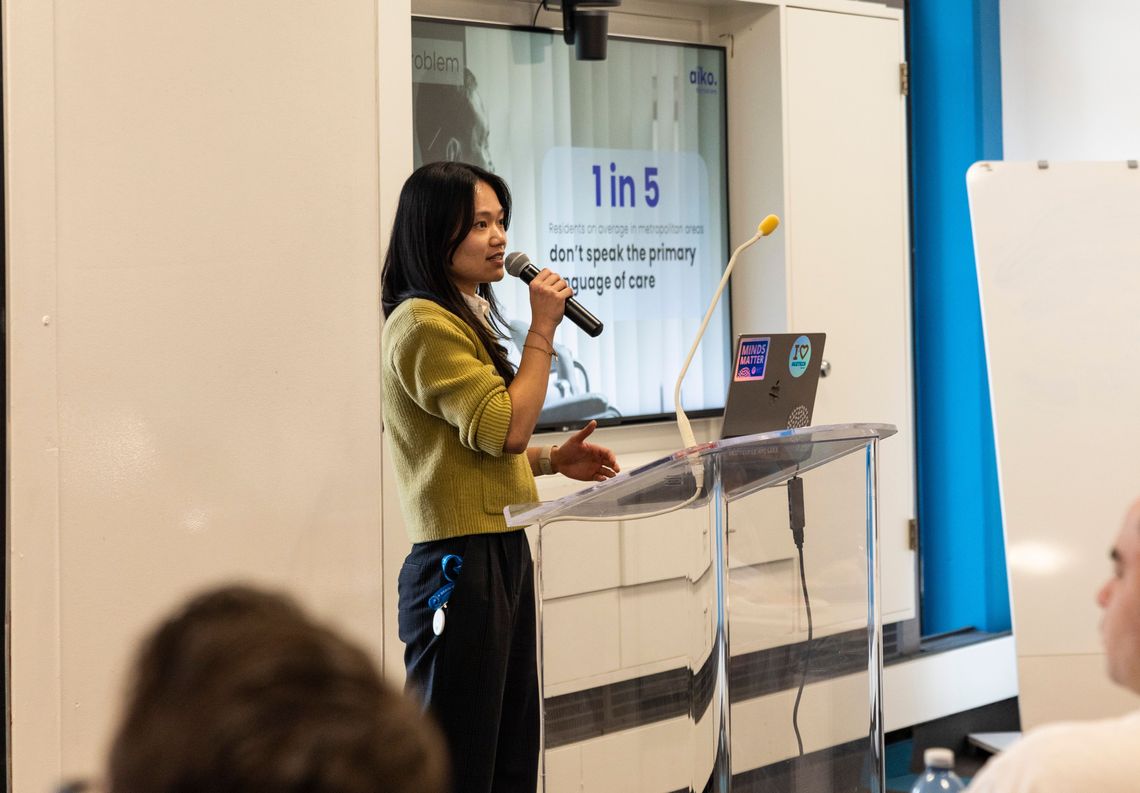
Catherine Xiong of Aiko Translations (Pitcher): An AI-driven translation tool for long-term care environments that adapts to residents’ speech patterns and languages. It fosters better communication between caregivers and residents, reducing stress and enhancing emotional connection.
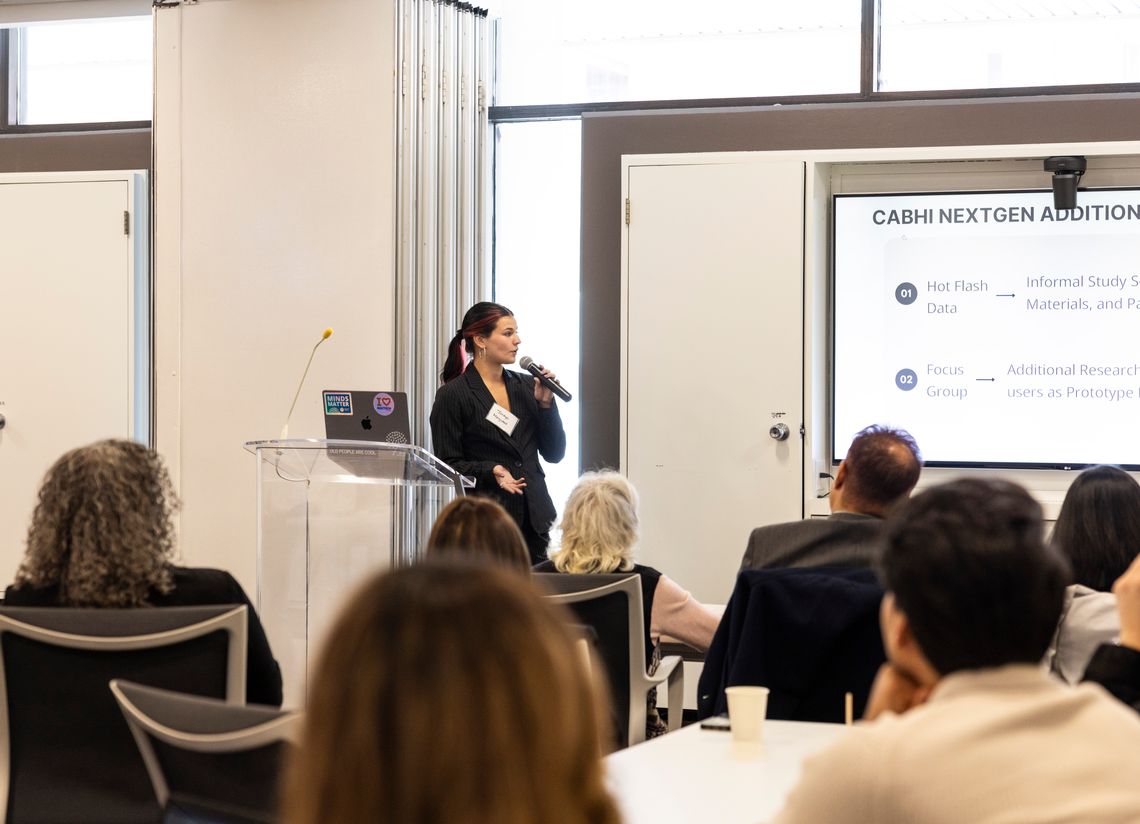
Jordyn Maywood of CoolFlash (Pitcher): A wearable garment that uses temperature and sweat sensors with thermoelectric modules to detect and cool hot flashes. It offers fast relief for menopausal symptoms, enabling comfort and daily function restoration.
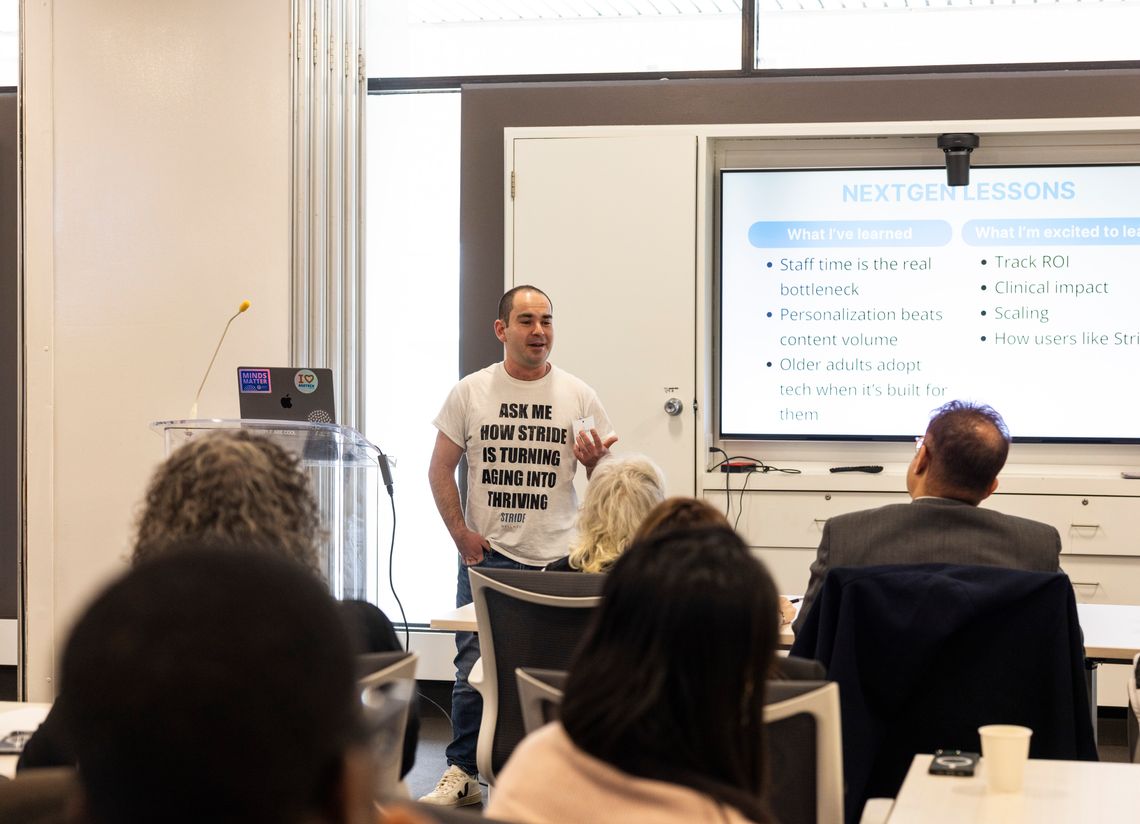
Sam Pencer of Stride Wellness (Pitcher): A mobile app offering short, personalized exercises and brain games for seniors to enhance mobility, balance, and cognition. It features simple visuals, habit-building rewards, and printable plans for caregivers and older adults.
Rayyan Chandna of ClickMate: An ergonomic alternative to the computer mouse designed for individuals with limited fine motor control. It enables larger, more comfortable movements for clicking and navigation, restoring accessibility and digital independence.
Priyanshi Desai of CueCare: A reusable clip-on sensor detecting urine and stool events in adult diapers via micro-suction gas sensors. It alerts caregivers instantly, reducing UTIs, improving hygiene, and preserving comfort and dignity for older adults.
Amna Khalid of Halo: An AI-powered mobile app that detects and intervenes in phone scams targeting seniors. It screens calls, alerts users to suspicious activity, and educates them through post-call reports, helping prevent fraud before it occurs.
Aditi Sandhu of Handl: A modular utensil attachment that stabilizes against hand tremors using real-time sensors and micro-motors. It fits onto standard cutlery, making it affordable and accessible while promoting independence and dignity for older adults.
Justin Rozeboom of HandleIt: A computer-vision tool guiding older adults through fine motor exercises linked to real-world tasks. It gamifies therapy with visual prompts and progress tracking, improving independence and reducing the need for constant supervision.
Matthew Keller of HearMate: A portable assistive hearing device using AI to isolate and clarify speech in noisy environments. It streams enhanced audio to existing hearing aids or headphones, improving clarity and reducing listening fatigue in group settings.
Hannah Derue of Pain+: A digital tool that allows users to visually express chronic pain experiences through art creation and modification. It analyzes visual and linguistic patterns to provide insights into pain perception and emotional states for personalized care.
Anthony Machula of Path Forward Neurotech: A dual-platform brain training system combining AR and gaming to enhance cognitive-motor integration. Through adaptive, gamified exercises, users engage brain networks linked to memory and coordination for improved neuroplasticity.
Chuma Asuzu of Pillsette: A portable smart medication dispenser automating dosage reminders and tracking adherence. It connects to an app for caregiver monitoring, improving medication management and reducing missed doses.
Joy Lai of Remindful: An AI-enhanced reminder system for dementia caregivers that integrates smart prompts with behavioural insights. It detects mood or cognitive changes through user interaction and supports early intervention and care coordination.
Maryjo Antonio of Tranquilo Wearables: A wearable and app system that monitors heart rate variability (HRV) to track cognitive health in older adults. When abnormalities appear, it triggers assessments and connects users to nearby support or care services.
Arien Alabar of Trustline: A voice authentication system that screens incoming calls for deepfake detection using Twilio and Reality Defender. It alerts both older adults and caregivers via SMS if a voice is deemed fraudulent, helping prevent scams and impersonation.
Applications for the third cohort of NextGen Support Package will open later this year. Sign up for CABHI’s newsletter below to be notified.