
Keeping co-design at the centre of innovation with our Lived Experience Council: Adele Ostfield
For nearly five years, Adele Ostfield has brought her expertise and passion to CABHI’s Lived Experience Council (formerly the Seniors Advisory Panel), helping shape innovations that better support older persons, people living with dementia, and care partners.
As a lifelong advocate for meaningful engagement and purpose-driven solutions, Adele spent decades of her professional career in human resources and organizational leadership. She served as Vice President of Human Resources for an international pet food and supplies distributor until 1999. She then returned to consulting, working with organizations across a variety of industries as a Human Resources and General Business Consultant.
Since retiring in 2019, she dedicates her time to a different passion: helping older persons embrace technology and use it to live fuller, more independent lives. Through her extensive volunteer work with Baycrest—in the Psychiatric Day Hospital, the Neurology Group, Apotex, and now the Kimel Family Centre—she has championed technology adoption among older persons and people living with dementia.
Volunteering with purpose
When asked what drew her to the now Lived Experience CouncilLived Experience Council, Adele pointed to her longstanding connection with Baycrest and her desire to contribute.
I like to be involved. I'm a tremendous supporter of Baycrest and CABHI, and I saw this as an opportunity to give.
Her involvement reflects a broader commitment to staying engaged and using her experience to make a difference.
Informing solutions for ultimate impact
For Adele, one of the most rewarding aspects of serving on the Council is seeing feedback translate into real change. Adele explained that the value of co-design is underscored when innovators listen, adapt, and incorporate recommendations from Council members—recommendations that stem from their lived experiences, making solutions more relevant and accessible to the intended audience.
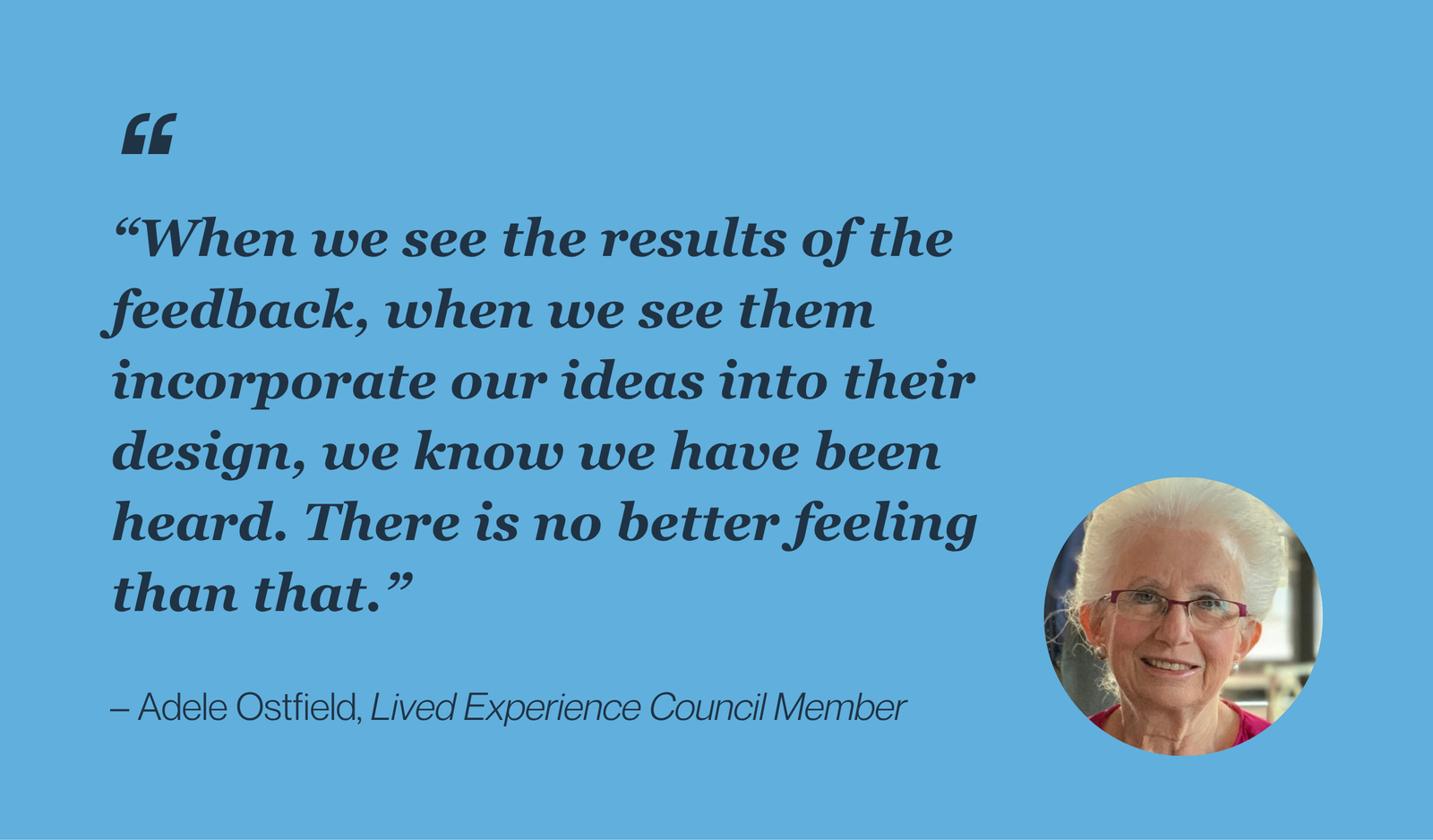
When we see the results of the feedback, when we see them incorporate our ideas into their design, we know we have been heard. There is no better feeling than that.
Moments like these reinforce the importance of including people with lived experience in the innovation process from the very beginning.
Since the beginning of her co-design journey with CABHI, Adele has supported the iterations of numerous innovations, including:
Cogni: A conversational AI companion that engages older adults through calls and games to monitor cognitive health. It analyzes speech and task performance to provide personalized reports and early detection of cognitive decline.
Stride Wellness: A mobile app offering short, personalized exercises and brain games for seniors to enhance mobility, balance, and cognition. It features simple visuals, habit-building rewards, and printable plans for caregivers and older persons.
Handl: A modular utensil attachment that stabilizes against hand tremors using real-time sensors and micro-motors. It fits onto standard cutlery, making it affordable and accessible while promoting independence and dignity for older persons.
HippoCamera: An app that guides users to record and replay rich memory cues from life events using established principles from the science of learning and memory.
Pathways to Cognitive Wellness: A unique, co‑designed dementia‑risk reduction program that combines transformational education (online and in‑person), lifestyle medicine, and brain‑health science with Indigenous wisdom, nature, plant‑based medicine, and ceremony.
Expanding the conversation around co-design
As Canada’s population continues to age at an accelerated rate, with nearly 20% of Canadians aged 65 or older, conversations about aging and brain health are more important and more prevalent than ever before. Innovators are looking for ways to support our nation’s aging population, and to do so, they need counsel from their end users to ensure their solutions meet real needs. While co-design is becoming more practiced, Adele believes that it’s crucial to broaden who is involved in the process to inclusion and accessibility.
We need to get more people involved in the process, and we must engage a broader, more diverse community.
She sees inclusive engagement as essential to creating solutions that truly reflect the needs and experiences of the people they are designed to serve.
The Joy of Helping Others Learn
Of the numerous Baycrest committees and boards Adele supported throughout her career—including personnel, strategy, and critical safety committees—the work that brings her the most joy is helping older persons better understand technology and incorporate it in their daily lives. The breakthrough moments when technology suddenly becomes accessible are what drives her to continue this meaningful work.
There is nothing more rewarding than working with an older adult who is struggling with technology and having him or her say, ‘I get it! I get it!’ That’s just such a wonderful feeling.
For Adele, those moments are a reminder of the true importance of innovation in the aging and brain health sector. It helps people stay connected and independent, and ultimately live a life with purpose, fulfilment, and dignity.