Subscribe to CABHI's Newsletter
Join our mailing list for timely updates.
How do promising ideas in aging and brain health move from research settings into the hands of the people who need them most? That question was top of mind at the first-ever CABHI Science Collaborative (CSC) Fellows Showcase, a virtual event celebrating nine emerging researchers who are translating their work into practical solutions for older persons, people living with dementia, care partners, healthcare professionals, and decision makers.
The inaugural cohort of CSC Fellows took centre stage, giving attendees a sneak peek into how each project is being shaped not only by research but also by lived experience. From virtual reality education and smart textiles to care partner toolkits, policy briefs, digital tools, and dashboards, the showcase offered insights into the next generation of aging and brain health innovation in action.
With nearly 20% of the Canadian population aged 65 and above, and dementia rates projected to surpass 1.7 million dementia diagnoses by 2050, research and innovation have an increasingly important role to play in strengthening care, supporting care partners, and helping older persons live with purpose, fulfilment, and dignity. CABHI’s Science Collaborative (CSC) was created to help scientists, researchers, and trainees build the skills, networks, and confidence needed to move research beyond academia into practice and policy.
The CSC Fellowship is exclusively open to CSC members, offering them the opportunity to apply for funding ($15,000 CAD in total support, including a $5,000 salary offset and $10,000 in project funding) to develop and launch a knowledge mobilization project based on their research. Beyond funding, Fellows gain access to a knowledge mobilization course, monthly learning series, CABHI’s acceleration services, and showcase opportunities—just like the one hosted at the end of June.
Co-hosted and moderated by Dr. Rosanne Aleong (Director of Research, Innovation, and Translation at CABHI and Executive Director of Research, Innovation, and Translation at the Baycrest Academy for Research and Education) and Dr. Linda Truong (Manager of Research, Innovation, and Training Integration at the Rotman Research Institute and the Baycrest Academy for Research and Education) the interactive webinar featured brief presentations from all nine CSC Fellows, audience engagement, trivia, prizes, and opportunities to learn more about the next generation of aging and brain health leaders.
Our nine Fellows took to the big screen to share their progress and offer a glimpse into what’s next for their individual projects. The presentations were organized into three sections based on the projects’ various target audiences:
Healthcare Professionals
Policy and Decision Makers
Older Persons and Care Partners
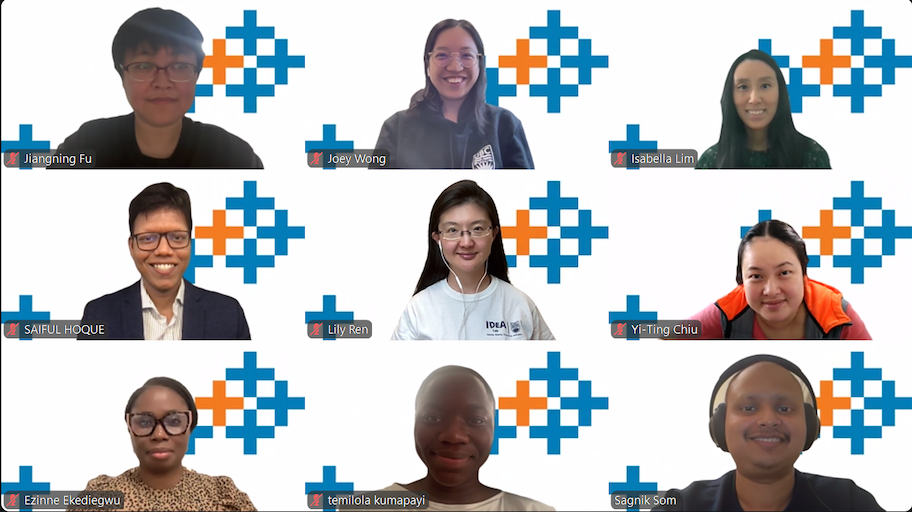
Dr. Jiangning Fu, a Postdoctoral Fellow at the University of British Columbia, highlighted a gamified mobile training tool grounded in person-centred care principles. Her project aims to support caregivers in providing person-centred care—making training more engaging, practical, and applicable in real-world care environments.
Sagnik Som, a master’s student at the University of Toronto, presented his project, which uses real-time location system data in long-term care homes to track and understand residents’ movement and rest-activity rhythms. By creating profiles displayed through a dashboard, his work aims to help professionals identify changes that may signal health changes.
Joey Oi Yee Wong, a PhD student at the University of British Columbia, shared her virtual reality dementia care education toolkit. Guided by an advisory group of people living with dementia, family partners, and a nursing educator, the toolkit aims to ensure education materials are ethically grounded in authentic and culturally diverse lived experiences.
Peace Kumapayi, a master’s student at York University, shared her project focused on co-developing and mobilizing culturally grounded, evidence-informed strategies that improve the equitable adoption and sustained use of digital aids among homebound Black older persons.
Haopu “Lily” Ren, a PhD student at the University of British Columbia, highlighted a toolkit addressing the ethical considerations of using virtual reality to support older persons living with dementia in hospital settings. Her work is designed to help hospital staff meet complex care needs while reducing potential harm and promoting ethical, person-centred care.
Ezinne Ekediegwu, a PhD Student at McGill University, presented a project focused on developing a Canada-specific policy brief on cognitive ability in older persons. Drawing on new elements identified through her research, the brief is intended to translate evidence into practical recommendations to improve care for older persons.
Dr. Yi-Ting Chiu, a Postdoctoral Fellow at the University of British Columbia, shared her work on the ethical and person-centred use of conversational artificial intelligence in dementia care. Her project translates research findings into accessible, story-based knowledge mobilization outputs designed to help caregivers, families, and practitioners better understand how digital companions can support social connection, dignity, and well-being in long-term care settings.
Dr. Isabella Lim, a Postdoctoral Fellow at Waypoint Centre for Mental Health Care, presented work on an integrated care delirium-prevention toolkit for family caregivers of acute care patients living with dementia. Her project aims to equip caregivers with practical resources that can support prevention, early recognition, and more coordinated care.
Dr. Saiful Hoque, a Postdoctoral Fellow at the University of Toronto, introduced his work centred on thermoregulating smart garments. Through a digital storytelling series and interactive community workshops, his project invites end users, caregivers, and physicians to experience smart textiles firsthand and contribute feedback through co-creation sessions.
In addition to spotlighting the innovative project developed by our inaugural cohort of Fellows, the CSC Fellows Showcase featured a fireside chat with Dr. Allison Sekuler, President and Chief Scientist at CABHI and the Baycrest Academy for Research and Education, and Dr. Rosanne Aleong.
The CABHI Science Collaborative Fellows Showcase offered a sneak peek into emerging talent, practical innovations, and the role of research in transforming the future of aging and brain health. By translating research into solutions co-designed with end users along the way, we can ensure emerging products are both accessible and impactful.
The momentum continues as CABHI soon awards its second cohort of CSC Fellows! Stay tuned for the upcoming announcement.
Haven’t joined the CSC yet? Join today! The CSC offers free opportunities for scientists, researchers, and trainees to build new skills in innovation. Participants build the capacity to confidently engage with stakeholders outside of academia—such as industry partners—and turn bold ideas into real-world impact.
Subscribe to CABHI's Newsletter
Join our mailing list for timely updates.