Designing Inclusive Innovation for the 50+ Market

Reports + Data Diversity, accessibility + health equity |
This report is a collaboration between CABHI and the International Federation on Ageing (IFA). It pairs CABHI’s expertise in end‑user research with the IFA’s global policy leadership to shape strategic priorities and support healthier aging worldwide.

CABHI and IFA emphasize the importance of co‑design, equity, and meaningful engagement of older adults in innovation. They highlight the growing need for age‑inclusive technology and acknowledge how digital tools can support independence, dignity, and social participation—while warning that older adults are too often excluded from design.
Canada’s aging population is rapidly increasing its use of digital technology. Most older adults use the internet daily, rely on digital tools for communication and tasks, and show strong interest in technology—yet face barriers such as cost, privacy concerns, scams, and poor age‑friendly design. Despite high adoption, Canadians 50+ remain underrepresented in technology design and engagement opportunities.
Technology adoption is high across every domain, especially for accessing services, managing finances, social connection, and entertainment. However, barriers persist—privacy concerns, usability challenges, trust issues, and cost. Only a minority feel that technology is designed with them in mind, yet over half are interested in co‑design. Geographic and age variations also shape adoption patterns, creating opportunities for more localized design and inclusive innovation.
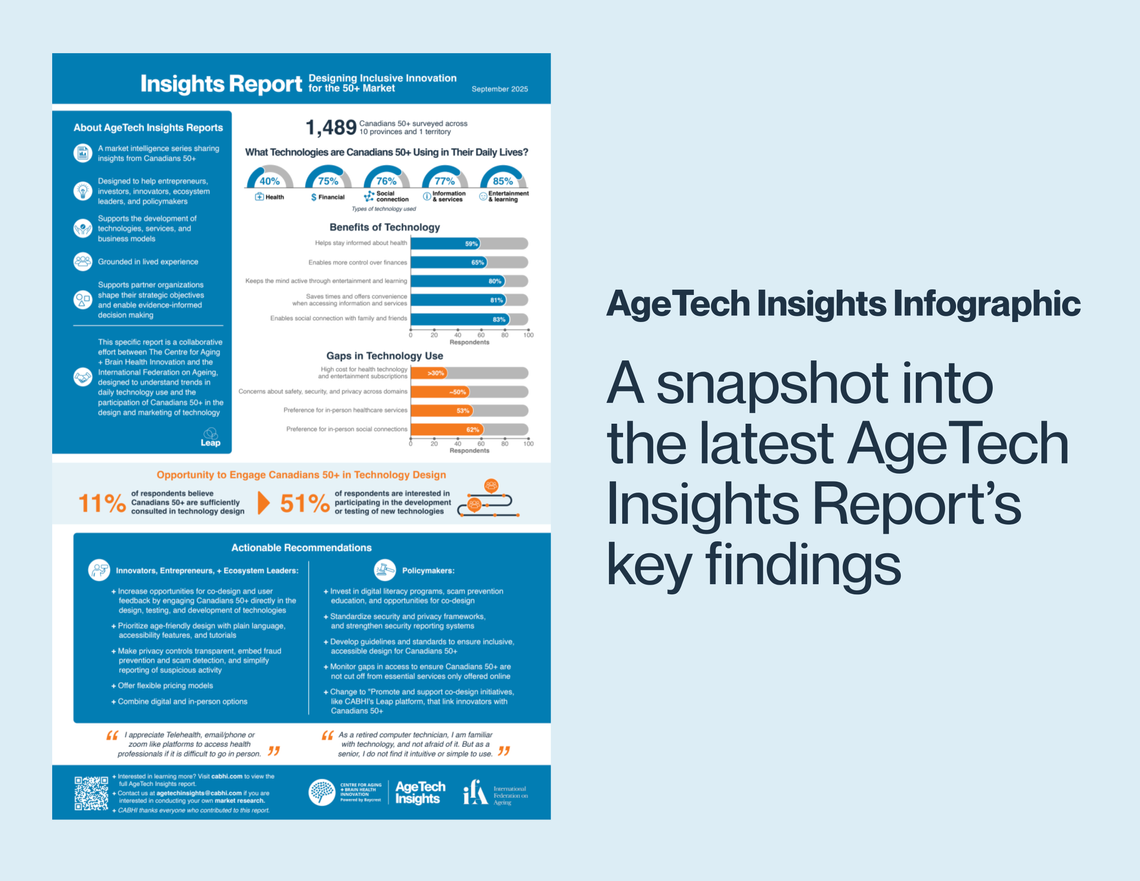
CABHI and IFA surveyed 1,489 Canadians aged 50+ to understand how they use technology in daily life—across health, finances, social connection, services, and learning—and to explore their engagement in the design and marketing of new technologies.
The online survey ran for two weeks and reached diverse participants across 10 provinces and one territory. Respondents ranged from age 50 to 90+, predominantly female, mostly English‑speaking, and generally well‑educated, with varied income levels and health conditions.


Key Findings

  • Using Technology to Manage Health
    Awareness of health technology is high, but regular use is low. Respondents value convenience, access to providers, and greater control over health. Barriers include cost, usability issues, limited functionality, trust concerns, and strong preference for in‑person care—especially among those 90+. Usage also varies across regions, with lower adoption in the Yukon and Newfoundland and Labrador.
  • Using Technology to Manage Finances
    Financial technology shows the strongest adoption of all categories. Most respondents use digital tools regularly, find them easy to use, and see clear benefits like saving time and staying informed. Trust is moderate, with privacy concerns persisting, and a significant portion still prefers in‑person or phone‑based services. Cost is generally not a barrier.
  • Using Technology for Social Connection
    Three‑quarters of respondents regularly use digital tools to stay socially connected, citing convenience, ease of use, and ability to stay in touch with loved ones. While cost is not a significant issue, more than half still prefer in‑person or phone interactions, and confidence varies by region.
  • Using Technology to Access Information + Services
    Respondents show strong adoption of digital platforms to access information and services. They find these tools functional, efficient, and empowering. However, privacy concerns, preferences for offline interactions, and occasional usability challenges remain barriers.
  • Using Technology for Entertainment + Learning
    Entertainment and learning technologies have high adoption and satisfaction. Respondents value mental stimulation, convenience, and access to activities not available in person. Barriers include subscription costs, usability frustration, and preference for traditional media.
  • From Users to Co‑Creators
    Most respondents feel they have autonomy in choosing technology and believe it supports independence. However, few feel technology is designed for Canadians 50+, and even fewer believe they’re properly consulted in design. Despite this, more than half are eager to participate in co‑design or testing.

Discussion

The agetech market is growing quickly, but gaps remain across use, trust, and equitable access. Older adults—especially those 90+ and those in smaller provinces—have distinct needs. Co‑design is a major untapped opportunity. Without inclusive design and policy support, older adults risk being left behind in an increasingly digital society.

Recommendations

Key actions include expanding co‑design, improving usability, prioritizing accessibility, integrating systems, building trust through privacy transparency, addressing cost barriers, offering hybrid models, and embedding strong scam/fraud prevention. Regional variability should shape tailored outreach, training, and product development.

Access the full report

Interested in learning more about how Canadians ages 50+use technology in daily life?

Subscribe to the CABHI newsletter

* indicates required