CABHI’s AgeTech Insights provides market intelligence into the evolving needs and priorities of populations across the lifespan, with a focus on aging, brain health, and technology. By centering lived experience and encouraging co-design approaches, AgeTech Insights aims to connect innovators, researchers, policymakers, and communities to support the development of inclusive and impactful agetech policies, products, and practices.
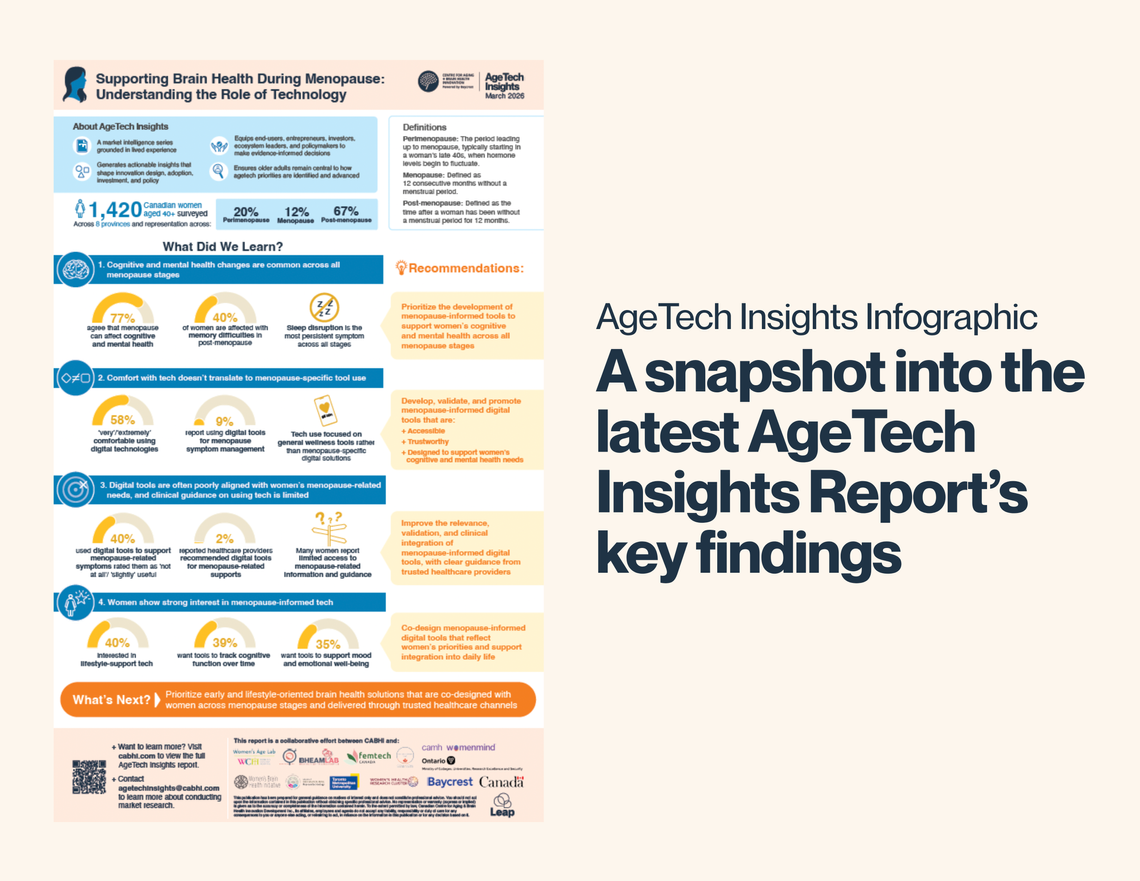
Menopause represents a critical yet under-addressed period for women’s cognitive and mental health, occurring at a life stage when many women remain active in the workforce, caregiving, and community life. While primarily considered a later-life event, menopause can occur at any reproductive age due to surgical removal of the ovaries, premature ovarian insufficiency, and chemotherapy (to name a few). Awareness of menopause-related cognitive and mental health changes is increasing, yet women continue to report limited access to timely, trustworthy, and integrated support. These gaps have implications not only for individual wellbeing, but also for population health, healthcare system demand, and economic impact, particularly as Canada’s population ages. This report was developed in response to a clear mismatch between women’s interest for technology-enabled support and the limited availability of menopause-informed, evidence-based digital solutions that are integrated into care pathways and lifestyle interventions.
This report is the result of a collaborative effort between CABHI and FemTech Canada; the Einstein Lab of Cognitive Neuroscience, Gender, and Health at the University of Toronto; the Galea Laboratory of Behavioural Neuroendocrinology at the Centre for Addiction and Mental Health; the Rajah Laboratory for Brain Health Equity in Aging and Memory at Toronto Metropolitan University; Women’s Age Lab at Women’s College Hospital; and the Women’s Brain Health Initiative.
Each partner contributed complementary expertise to strengthen the scientific rigor, equity focus, and real-world relevance of the report. Academic research partners--including the Galea Laboratory, Einstein Lab, Rajah Laboratory, and Women’s Age Lab--ensure that the findings are grounded in current evidence from neuroscience, neuroendocrinology, cognitive aging, and women’s health research. Their involvement supports alignment with best practices in evidence-informed care and interpretation.
Women’s Brain Health Initiative brings a public health and knowledge translation perspective, supporting the development of accessible and evidence-based information for women across the lifespan. FemTech Canada contributes policy and advocacy expertise, helping ensure that the findings of this report reach all women with menopause including older persons, innovators, and decision-makers working to advance women-centred health technologies.
The integration of research, policy, and innovation perspectives underscores a shared commitment to improving women’s brain health across early- and later-midlife and older adulthood, and reflects the importance of bridging evidence, lived experience, and technology development.
CABHI is proud to work alongside its partners to advance understanding in this area and to support innovators, healthcare systems, and policymakers in responding to identified gaps. Findings such as those presented in this report contribute to informed decision-making, inclusive innovation, and sustained investment in solutions that support women’s health and wellbeing across the lifespan.
Dr. Negar Mazloum-Farzaghi, Lead Writer and Co-Principal Investigator for the AgeTech Insights Reports and Knowledge Broker at the Centre for Aging + Brain Health Innovation
Dr. Allison Sekuler, Co-Principal Investigator for the AgeTech Insights Reports and President and Chief Scientist at the Centre for Aging + Brain Health Innovation
James Mayer, Co-Principal Investigator for the AgeTech Insights Reports and Chief Operating Officer at the Centre for Aging + Brain Health Innovation.