
CABHI and the Government of Ontario deepen partnership to develop highly qualified talent and translate research into economic and social impact
On July 30, 2026, the Centre for Aging + Brain Health Innovation (CABHI), powered by Baycrest, welcomed the Hon. Nolan Quinn (Ontario Minister of Colleges, Universities, Research Excellence and Security-MCURES) and Mohamed Firin, MPP for York South—Weston, to the CABHI campus to explore opportunities for deeper collaboration in support of better brain health, job creation and supporting the discovery and exploitation of Ontario-made intellectual property (IP). CABHI is a longstanding recipient of MCURES funding, demonstrating a strong track record of real-world impact in the province, and beyond.
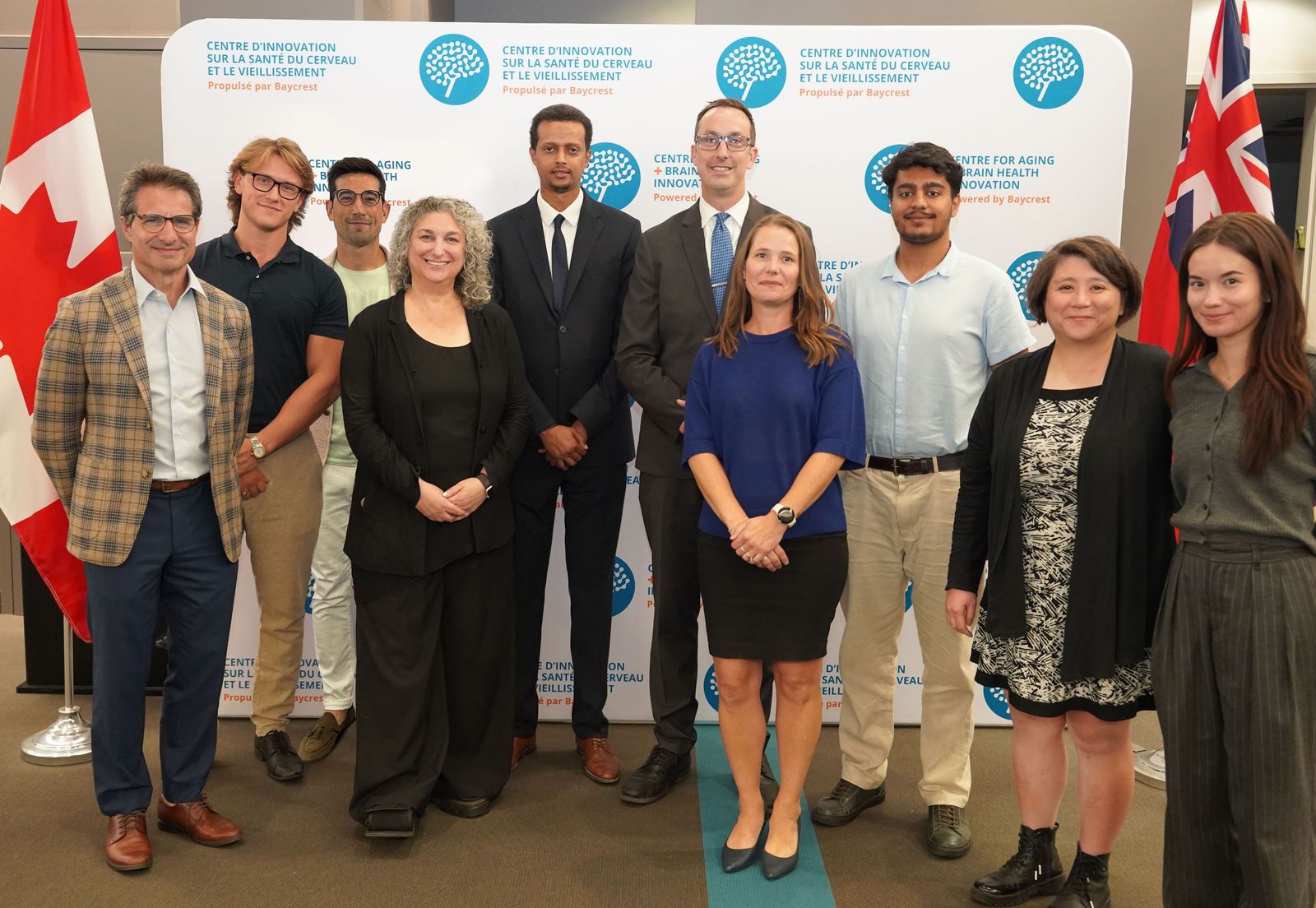
L-R: Joe Freedman, Aidan Steeves, James Mayer, Dr. Allison Sekuler, MPP Mohamed Firin, The Hon. Nolan Quinn, Linda Mayhue, Yuvraj Walia, Dr. Rosanne Aleong, and Millie Lawrence.
Throughout the visit, CABHI leadership showcased how the pan-Canadian aging and brain health innovation catalyst is advancing artificial intelligence (AI)-powered innovation and critical technologies that create jobs and drive investment, promoting research excellence, and building innovation partnerships across Ontario’s innovation ecosystem. The CABHI Science Collaborative and the NextGen Support Package were also hot topics—two initiatives that are fostering innovation skill development in scientists, researchers, trainees, as well as students and recent graduates—ultimately driving the translation of research into commercially viable solutions that benefit older persons and care partners.
“Ontario’s world-class life sciences researchers are making ground-breaking discoveries that are saving and improving lives. It was great to visit the Centre for Aging + Brain Health Innovation to get a closer look at the solutions that are being produced and commercialized right in our own backyard, ensuring Ontario stays at the forefront of innovation.
— The Hon. Nolan Quinn, Minister of Colleges, Universities, Research Excellence and Security
The CABHI team presented early design concepts for a new proprietary AgeTech IP Database, planned to launch this year, which will serve as a dynamic repository of aging and brain health-related IP—including that developed by colleges and universities. The tool will serve as a national platform to promote the discovery and exploitation of Ontarian and Canadian IP, strengthening global competitiveness in support of provincial and federal trade priorities. Along similar lines, we presented some of the key findings from our recent AgeTech Insights reports, which are exposing timely opportunities for policy, innovation and investment that respond to emerging market needs and trends.
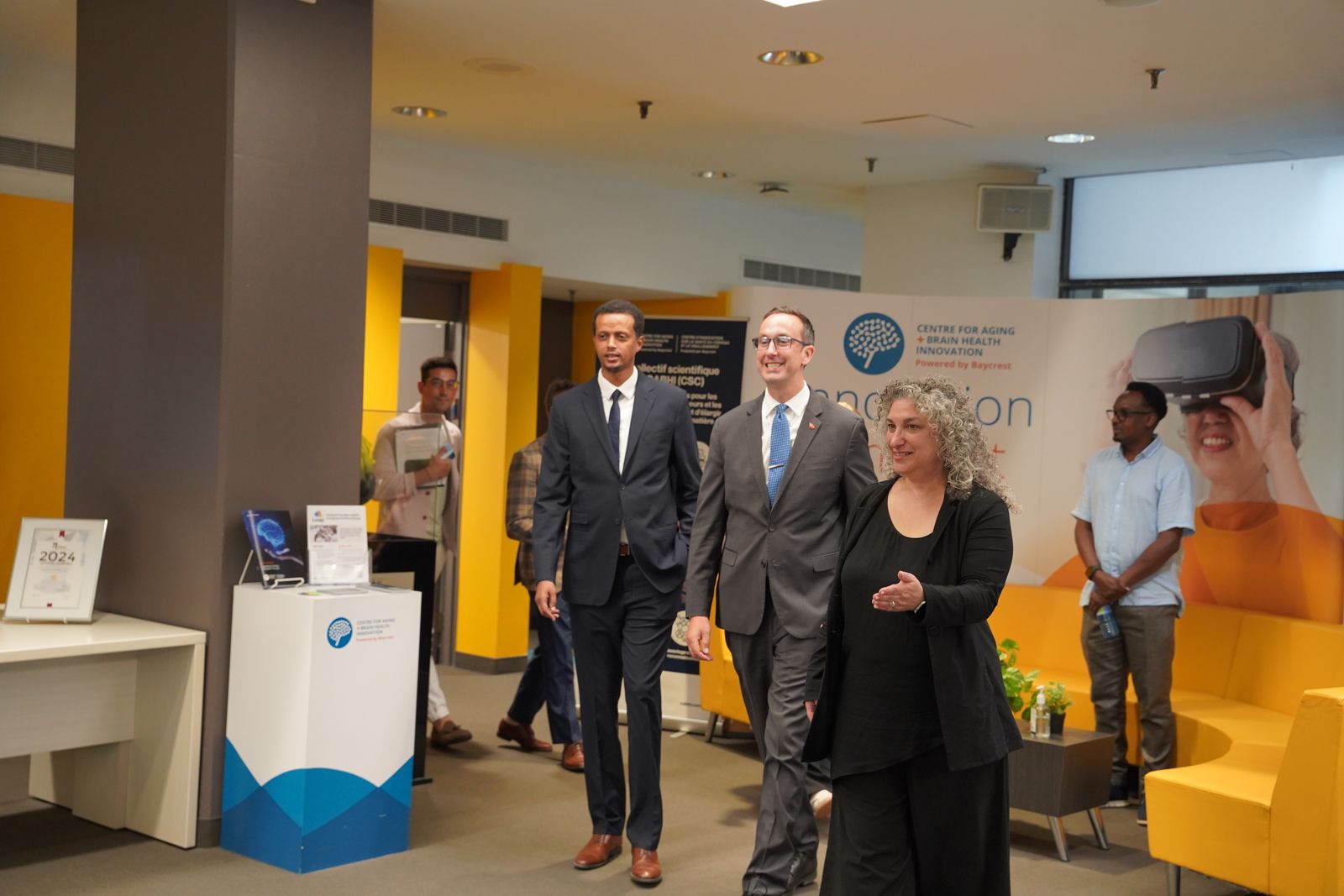
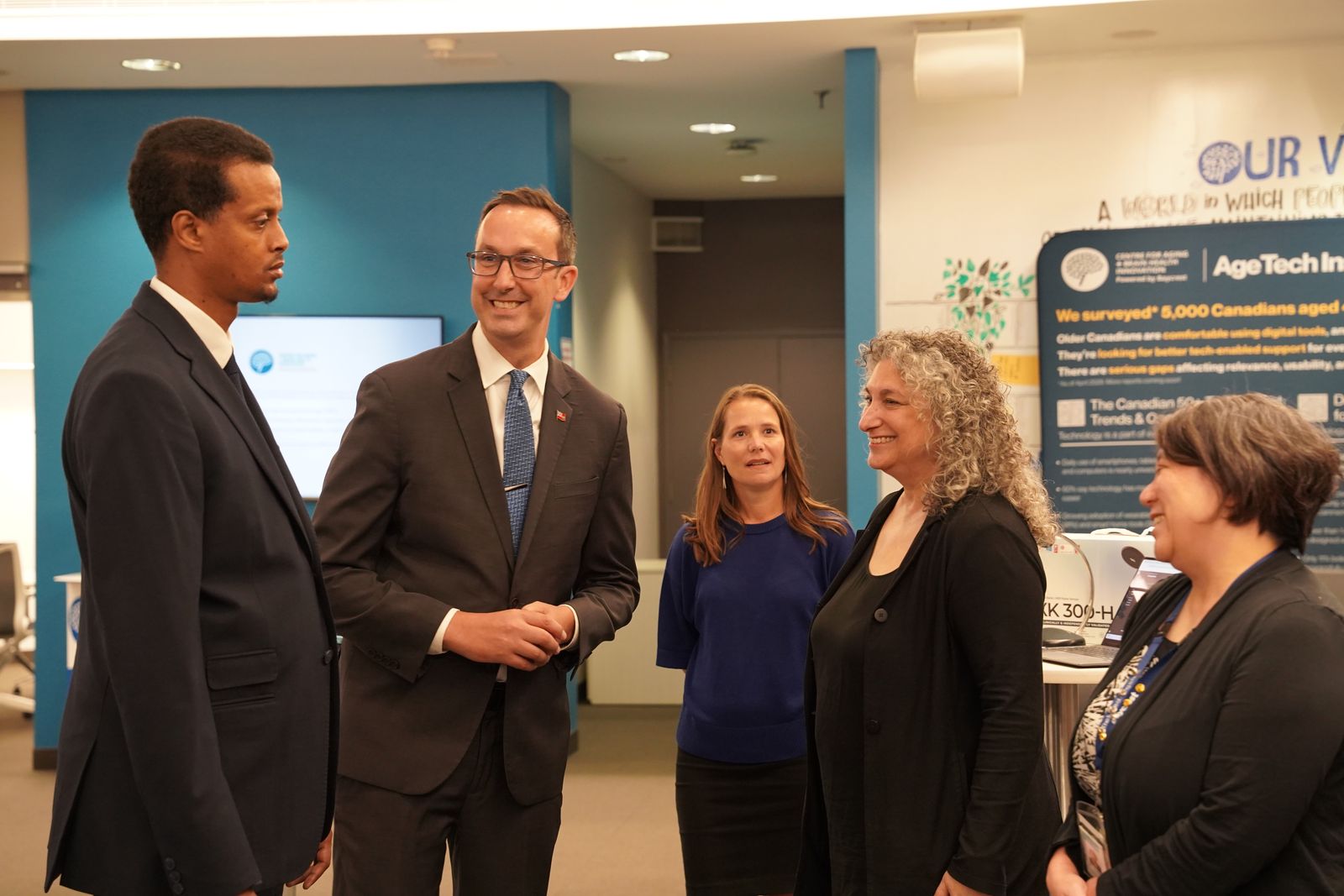
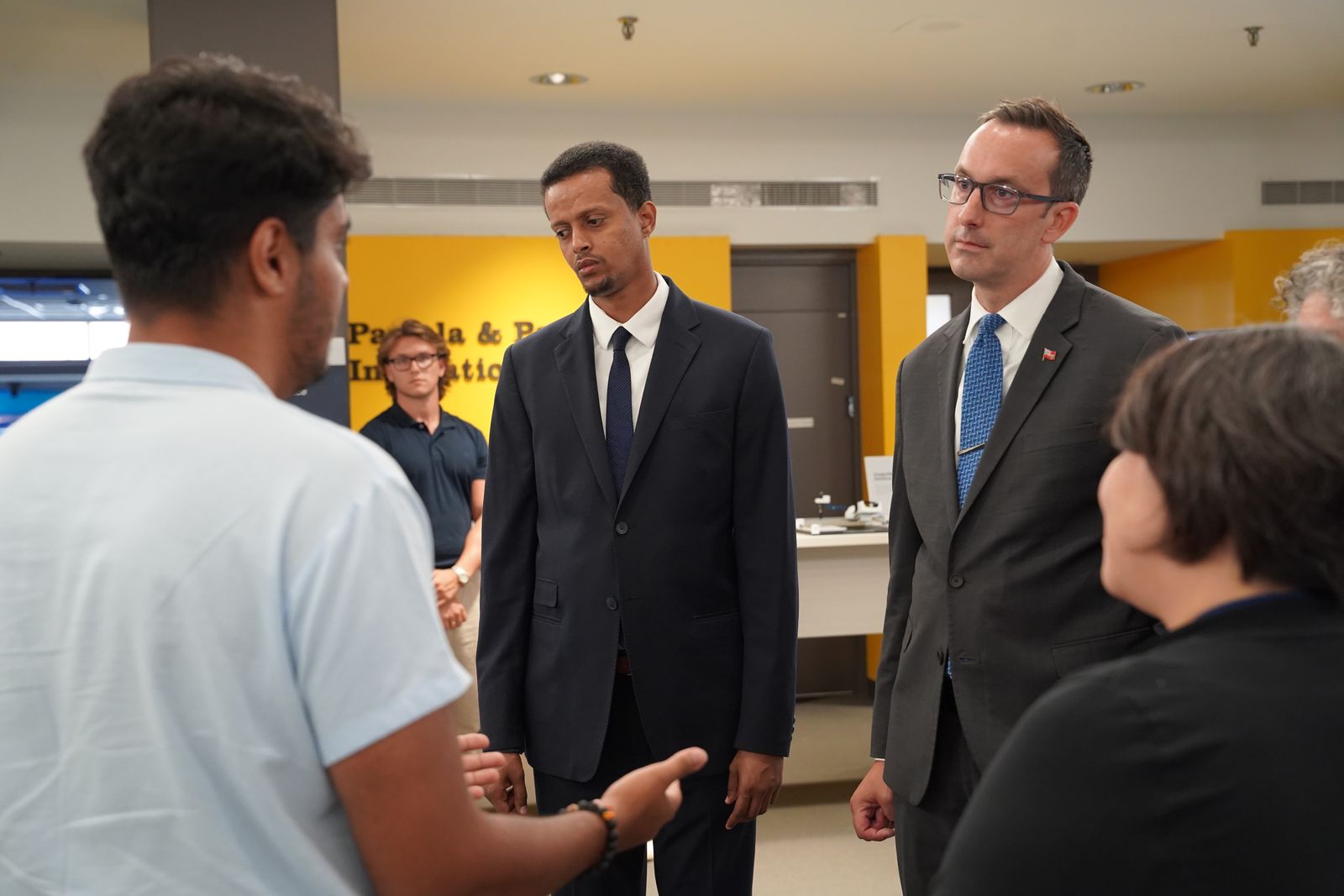
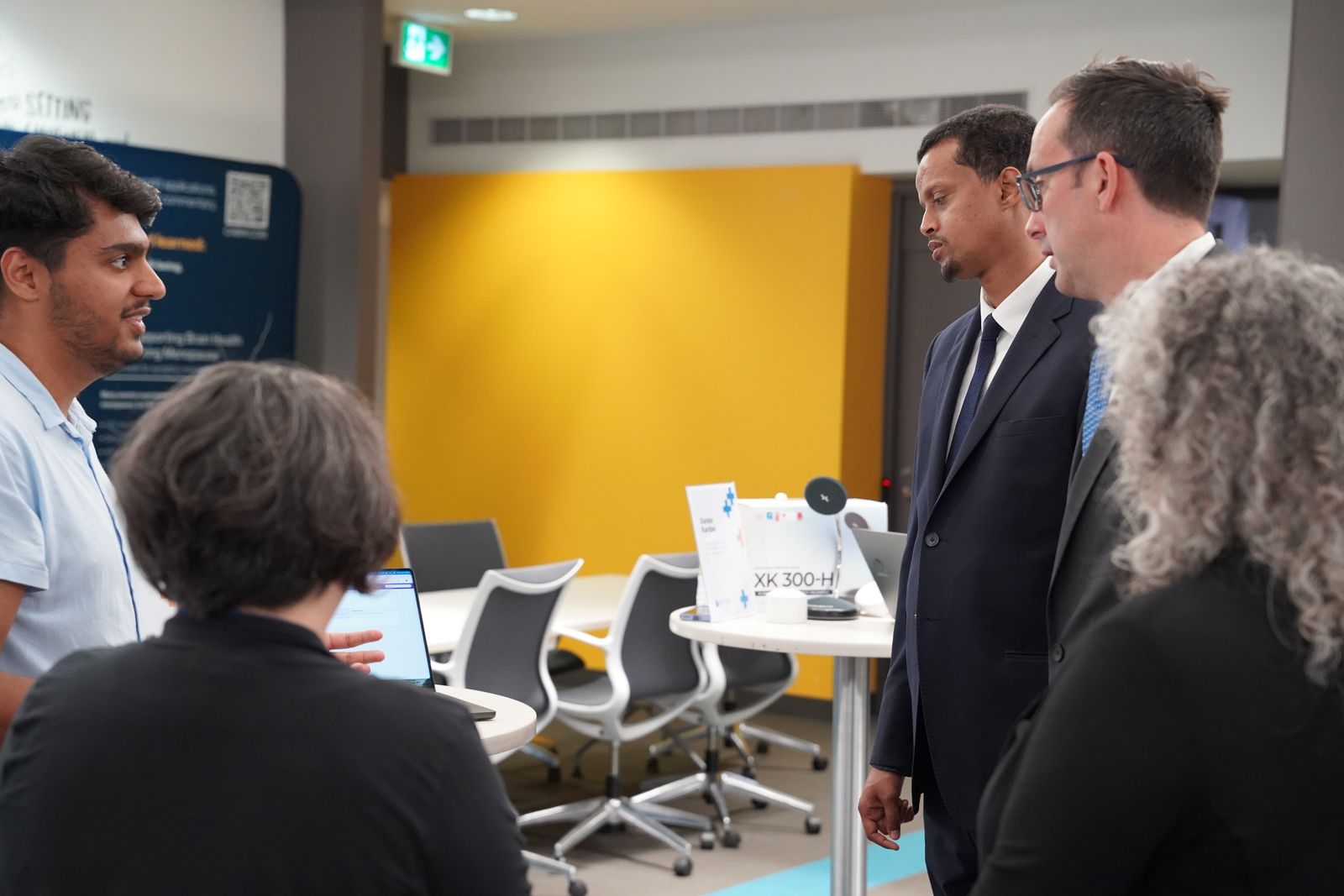
To illustrate how all of this work culminates in real-world impact, Minister Quinn and MPP Firin toured CABHI's innovation space and connected with innovators developing solutions for some of the most pressing challenges associated with aging, brain health, and dementia. These solutions have the power to reduce pressure on healthcare systems, support care teams, and attract investment into the Canadian economy, all while improving quality of life for Canada’s super-aged population.
Three CABHI-supported innovators demonstrated their solutions, which are tackling early detection of cognitive decline, memory retention, fall prevention, and more.
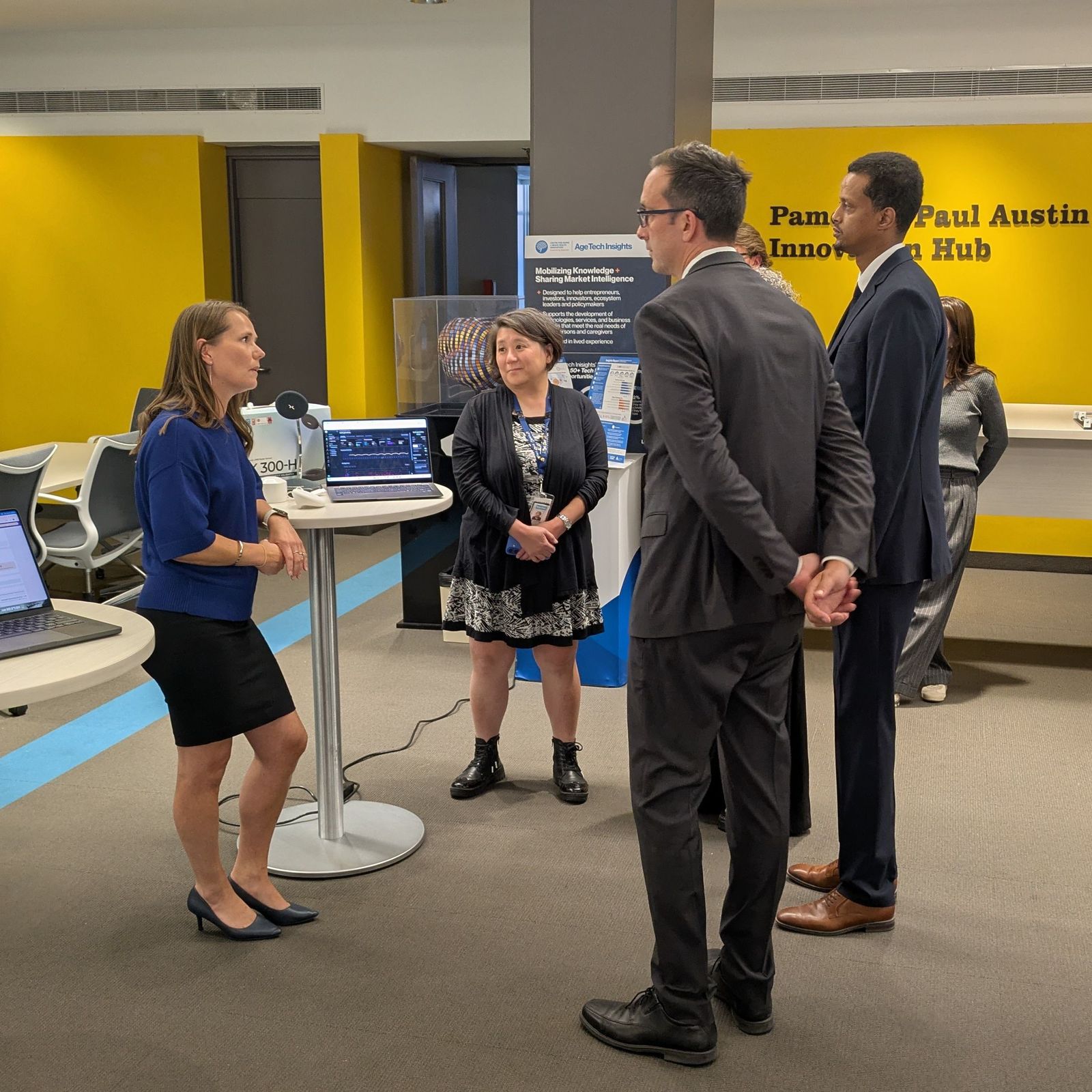
Linda Mayhue, RN, MPH, Senior Director, Clinical & Customer Success, presented on behalf of Xandar Kardian, a company previously supported through CABHI’s Mentorship, Capital, and Continuation program. Xandar Kardian is the creator of contactless radar sensing that monitors vital signs, movement, and falls without wearables. Linda shared a live radar demonstration showing real-time monitoring of heart rate, respiration, and movement from across the room, followed by a quick walkthrough of how the platform flags anomalies, such as falls or distress.
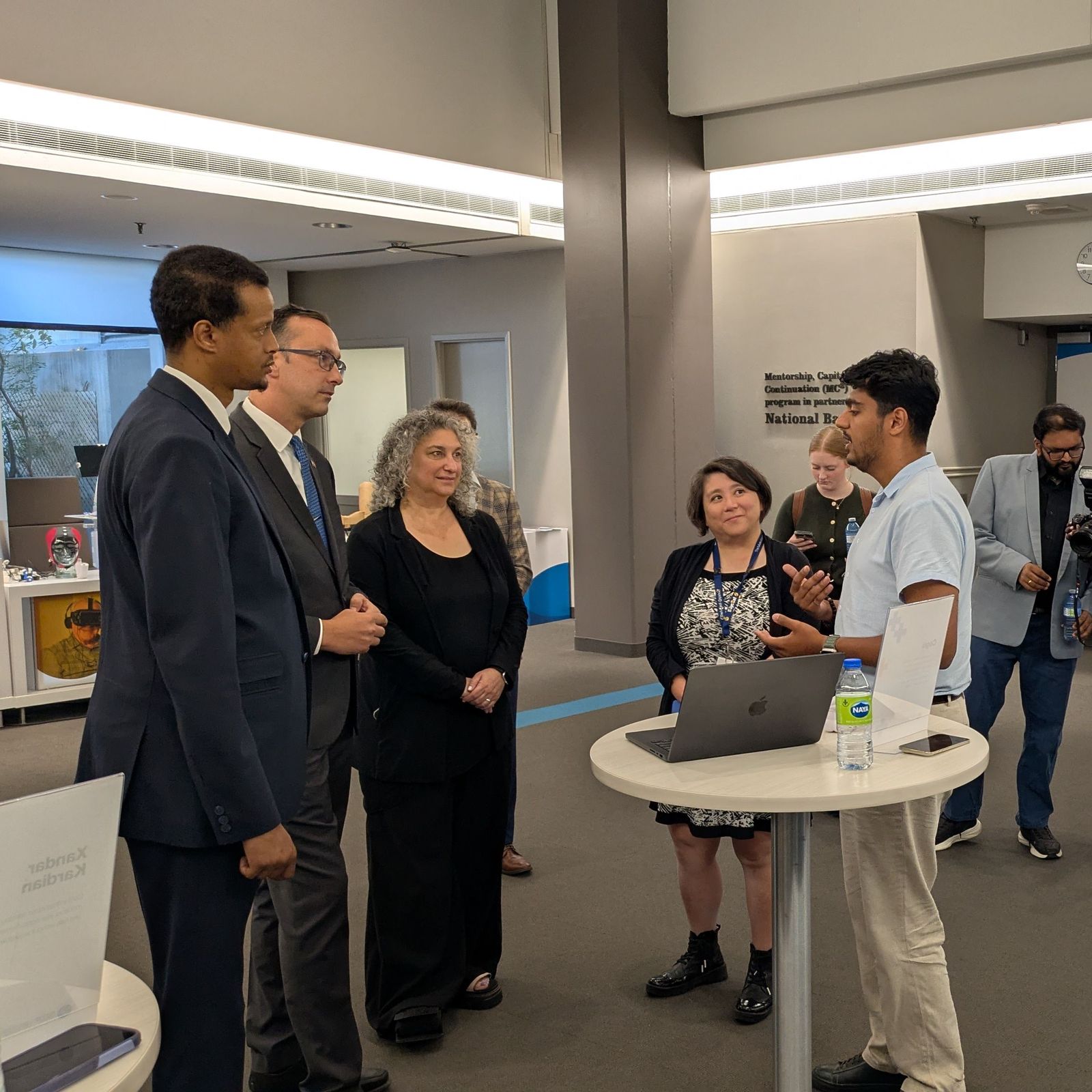
Yuvraj Walia presented his NextGen- and now Ignite-supported innovation, Cogni—an AI-powered cognitive monitoring platform that uses voice analysis to support earlier insight into cognitive change. His demonstration included a simulated voice recording that depicted how his AI-powered solution analyzes speech patterns and then translates them into cognitive health insights on the platform’s dashboard.
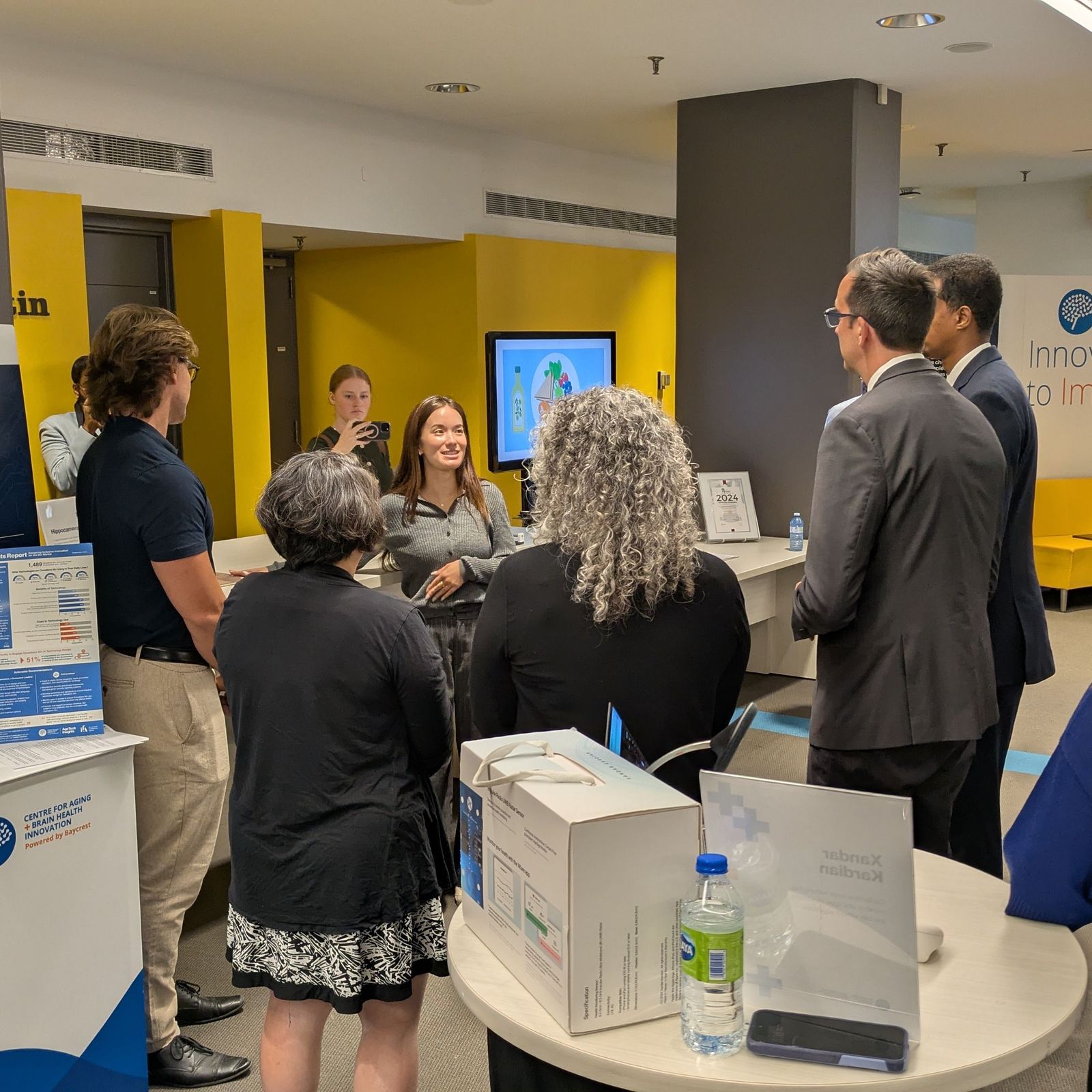
Millie Lawrence, a graduate student, and Aidan Steeves, a PhD student, presented Dr. Morgan Barense’s CABHI-supported solution, HippoCamera—a digital therapeutic app designed to support memory retention by helping users capture and revisit meaningful daily moments using evidence-based techniques rooted in neuroscience. Millie and Aidan demonstrated how the app captures a moment and then prompts recall and reflection over time to support memory strengthening and cognitive engagement.
Together, these innovators demonstrated how strategic investments in aging and brain health can drive better outcomes for older persons, strengthen healthcare systems, and position Ontario as a leader in agetech and brain health innovation. By working together to advance the aging and brain health sector, the Government of Ontario and CABHI are building a brighter future powered by AI and critical technologies for our super-aged nation—one filled with opportunity and healthier brains.