
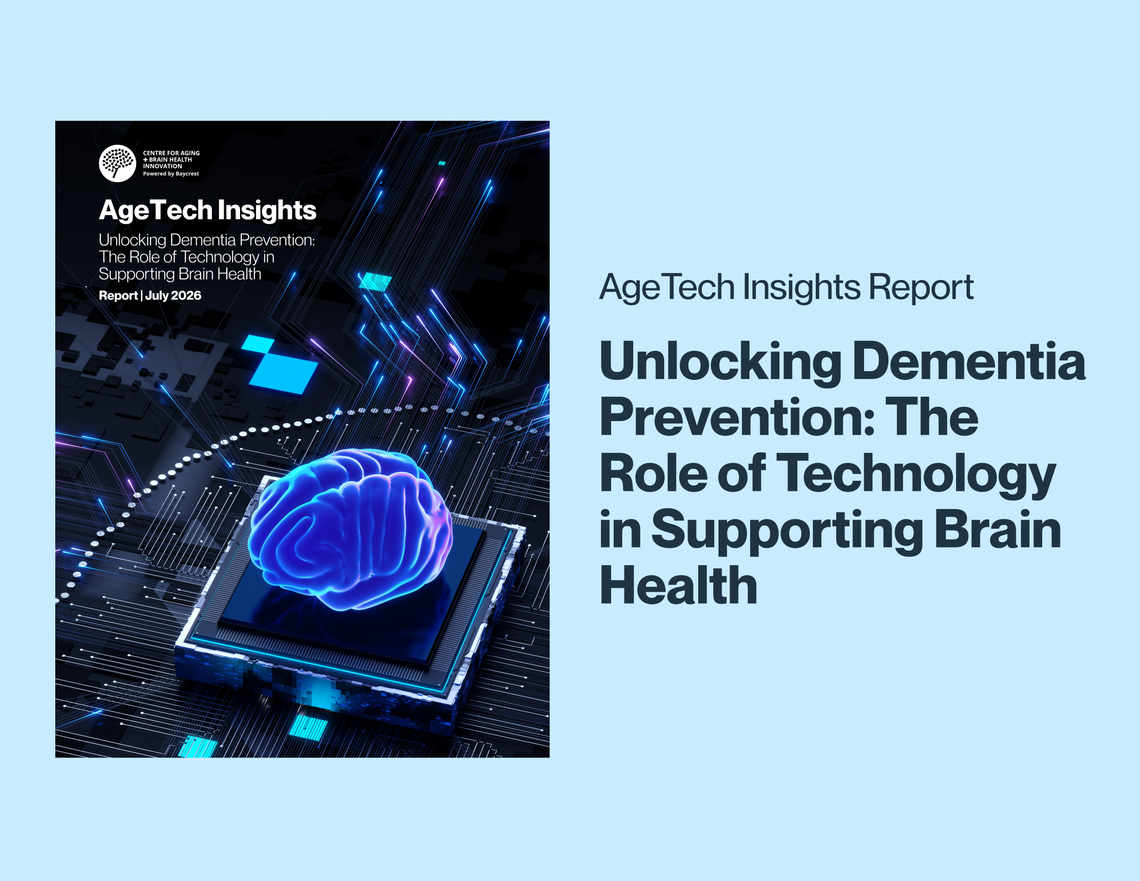
Unlocking Dementia Prevention: The Role of Technology in Supporting Brain Health
Created in partnership the National Institute on Ageing, Alzheimer’s Society of the United Kingdom, and the Toronto Dementia Research Alliance, this report examines public awareness of dementia prevention, the challenges people face in adopting behaviours that support their brain health, and the evolving role that new technologies can play in helping to bridge the gap between knowledge and action.

The publication of this report comes at a remarkable moment. For decades, dementia was widely viewed as an inevitable consequence of aging. In many of those same decades, our most advanced technologies, such as televisions and personal computers, were only found in offices or living rooms, while artificial intelligence (AI) remained largely a subject of science fiction.
Today, years of research and scientific progress have transformed our understanding of dementia. A growing body of evidence indicates that up to 45% of dementia cases may be linked to modifiable risk factors that can be reduced through lifestyle and other interventions across the lifespan. At the same time, smartphones, wearable devices, digital health platforms, and AI tools are increasingly becoming part of our everyday lives. Together, these developments offer new ways to help people adopt and sustain behaviours that support their brain health. Realizing that potential, however, requires a deeper understanding of how people view dementia prevention, what motivates action, and the barriers that stand in the way.
Our latest AgeTech Insights Report explores these important questions. It examines public awareness of dementia prevention, the challenges people face in adopting behaviours that support their brain health, and the evolving role that new technologies can play in helping to bridge the gap between knowledge and action.
We are grateful to our valued partners, including the National Institute on Ageing, Alzheimer’s Society of the United Kingdom, and the Toronto Dementia Research Alliance, for generously sharing their expertise for this publication.
This report exemplifies CABHI and our partners’ commitment to advancing healthy aging through research, collaboration, and knowledge sharing. We hope that the findings presented help inform policy, innovation, and practice, while sparking conversations and partnerships that improve brain health and quality of life as people age.
Dr. Graham Flick, Lead Writer and Co-Investigator for AgeTech Insights Reports and Knowledge Broker at the Centre for Aging + Brain Health Innovation
Dr. Allison Sekuler, Co-Principal Investigator for the AgeTech Insights Reports and President and Chief Scientist at the Centre for Aging + Brain Health Innovation
James Mayer, Co-Principal Investigator for the AgeTech Insights Reports and Chief Operating Officer at the Centre for Aging + Brain Health Innovation.
Awareness around lifestyle changes that lower dementia risk is rising, but people do not feel equipped to make those changes.
The lifestyle changes that support brain health are typically made to improve general health rather than prevent dementia.
Recognition is strongest for well-known lifestyle factors that can reduce dementia risk, such as physical activity and social engagement, but notably lower for other clinically significant risks, such as hearing loss and vision loss.
Barriers to implementing lifestyle choices that support brain health differ—ranging from lack of motivation to difficulty changing routines and lack of time— suggesting no single solution will work.
Digital technologies are already widely used and are helping many people adopt healthier behaviours.
As populations in Canada, the United Kingdom, and around the world continue to age, dementia is becoming one of the most urgent health challenges of our time. By 2050, the number of people living with dementia worldwide is expected to more than double, creating growing pressure on health systems, long-term care, families, and communities. But while dementia is often seen as an inevitable part of aging, research shows that this is not the full story.
A growing body of evidence suggests that many cases of dementia may be delayed or prevented by addressing risk factors earlier in life. Everyday actions—such as staying physically active, managing chronic conditions, treating hearing or vision loss, reducing smoking and alcohol use, staying socially connected, protecting mental health, and reducing exposure to air pollution—can all play a role in supporting long-term brain health.
This shift in understanding is creating new opportunities for innovators, healthcare leaders, and communities to help people take meaningful action. Digital tools such as smartphones, wearable devices, and AI-powered health supports are making it easier for individuals to track habits, receive personalized feedback, and stay motivated over time. These technologies could play an important role in helping people move from awareness to action.
This report explores what aging adults in Canada and the United Kingdom know about brain-healthy behaviours, what motivates them to make changes, and what barriers get in the way. Drawing on insights from more than 2,000 adults, it looks at how technology can help close the gap between knowing what supports brain health and being able to make those changes in everyday life.
Market Signals
Below is a high-level summary of the market signals. To dive deeper, download the full report.
-
Signal 1: There are persistent gaps between knowledge, action, and confidence
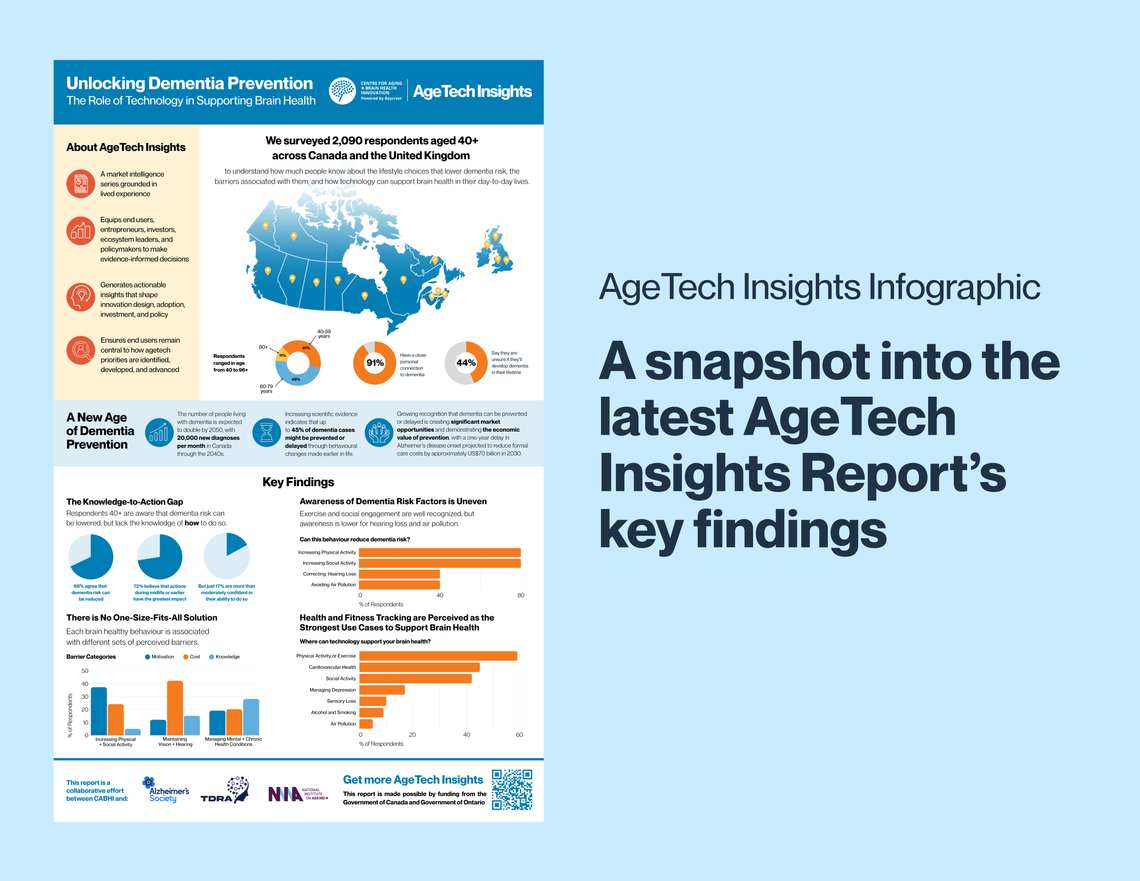
Public knowledge of the ability to delay or prevent dementia has reached a meaningful level, but a clear knowledge-to-action gap remains in translating awareness into confidence and action.Two-thirds of adults surveyed agreed that dementia risk can be reduced, while only a small minority disagreed (5%). 72% believed that actions taken during midlife or earlier have the greatest impact on dementia risk, and 65% correctly recognized at least 5 of the 10 examined protective behaviours that support brain health. However, just 43% felt informed about how to reduce their own risk, and only 17% expressed more than moderate confidence in their ability to do so.The data indicate that awareness is strongest for behaviours that are already embedded in broader healthy aging narratives, such as the value of exercise and social engagement, which were recognized for their dementia prevention benefits by 4 out of every 5 adults surveyed.In contrast, there was much weaker awareness of lower-profile modifiable risk factors, such as hearing and vision loss, depression, and exposure to air pollution, which were only recognized as dementia risk factors by 55% or fewer respondents. This suggests that important opportunities remain to increase awareness of these less recognized modifiable risk factors, reinforcing the need for continued, targeted public health campaigns.
-
Signal 2: Dementia prevention is not one, but several, distinct behavioural challenges
Dementia prevention is shaped by multiple distinct behavioural challenges, each requiring different types of interventions and solutions. This shows that innovators, health systems, governments, and advocacy groups cannot rely on a single narrative or engagement strategy to harness the growing awareness of dementia prevention.
For lifestyle-oriented behaviours, such as physical activity and social engagement, the dominant barriers were motivational rather than related to awareness or understanding. Adults 40+ most commonly identified lack of motivation (34-40%), difficulty changing routines (22-26%) and lack of time (24-26%) as barriers to becoming more active or socially engaged.
In contrast, sensory health interventions appear constrained primarily by affordability and access. Hearing and vision loss generated the highest levels of cost-related barriers (selected by 42% of respondents) across all surveyed prevention factors, despite the growing scientific recognition of their importance for dementia risk.
-
Signal 3: The strongest digital health opportunities in dementia prevention are tied to behaviour tracking and ongoing support
With regard to dementia prevention, our findings suggest that aging adults see the greatest value in harnessing the tools that they already use in their day-to-day lives.The clearest opportunities emerged around physical activity, chronic disease management, and social engagement. These were the most endorsed areas where digital tools could provide support for leading brain-healthy lifestyles, indicating an existing understanding of the link to dementia prevention.When asked how they would use digital tools to increase physical activity and social engagement, respondents endorsed wearable devices (26%) and online social connection (27%), suggesting that technologies providing real-time feedback, progress monitoring, and behavioural reinforcement resonate strongly among aging adults.In contrast, respondents expressed less confidence in digital tools for addressing behaviours tied to addiction, environmental exposure, and injury prevention.
-
Signal 4: People are making brain-healthy lifestyle choices for general health benefits
When selecting changes they’ve made to support their general health, 63% of people reported participating in physical activity or exercise programs, 48% reported improving their diet or nutrition, and 44% reported managing chronic health conditions, such as high cholesterol, diabetes, hypertension, and obesity. Other common answers included correcting vision loss (41%), improving sleep (40%), and reducing or eliminating alcohol consumption (32%), with 93% of respondents indicating that they had made at least one lifestyle choice to improve their general health.In contrast, only 66% of respondents reported making a lifestyle change to specifically reduce their dementia risk. The most common lifestyle choices motivated by dementia risk were similar to those motivated by general health, but less common overall. These were participating in physical activity or exercise programs (36%), improving diet or nutrition (25%), and improving sleep (23%). When asked what motivated them to make brain-healthy lifestyle choices, the most common answers were maintaining quality of life (73%), staying independent (66%), fear of memory loss or cognitive decline (42%), and living longer (32%). Only 11% of respondents indicated that their desire to maintain their brain health was based on the advice of a doctor or another healthcare professional.
Key Takeaways for Innovators
Below is a high-level summary of key takeaways for innovators. To dive deeper, download the full report.
-
Close the "knowledge-to-action" gap
Awareness of dementia prevention is steadily increasing, but confidence and follow-through remain low. Most people believe that dementia risk can be reduced, but don’t feel capable of doing so on their own.
Innovation opportunities:
Create solutions that improve brain health by encouraging action rather than offering education alone.
Tap into existing motivations to help users form health habits through personalized coaching, reminders, accountability, and supportive feedback.
-
Build on technologies and habits that people already own and use
Survey respondents expressed the strongest support for technologies they already use daily: smartphones, wearable devices, and other tools that monitor activity, manage chronic disease, and encourage social engagement.
Innovation opportunities:
Accelerate adoption by embedding dementia prevention and brain health support into existing consumer products, instead of requiring users to adopt new technologies.
Connect with existing fitness, nutrition, sleep, hearing, vision, and cardiovascular tools that support cognitive health, and build dementia-prevention features into smartphones, tablets, and smartwatches rather than standalone products, lowering the barrier to adoption.
-
Add brain health motivation to existing products for added value
Many respondents already exercise, maintain a healthy diet, manage blood pressure, and prioritize sleep, but they generally do so for overall health goals rather than dementia prevention.
Innovation opportunities:
Highlight the benefits of existing products for brain health.
Connect the existing value of tools and services that support fitness, nutrition, sleep, hearing, vision, and cardiovascular health to cognitive health and dementia prevention.
-
Build trust to unlock AI-enabled health tools
26% of survey respondents are already using AI systems in their daily lives, but trust is a major barrier to AI uptake in health and medicine.
Innovation opportunities:
Demonstrate transparency, privacy, clinical validation, and human oversight to overcome the trust barrier.
Establish credibility with end users to build a competitive advantage as AI adoption grows.
Insights to Inform Innovation
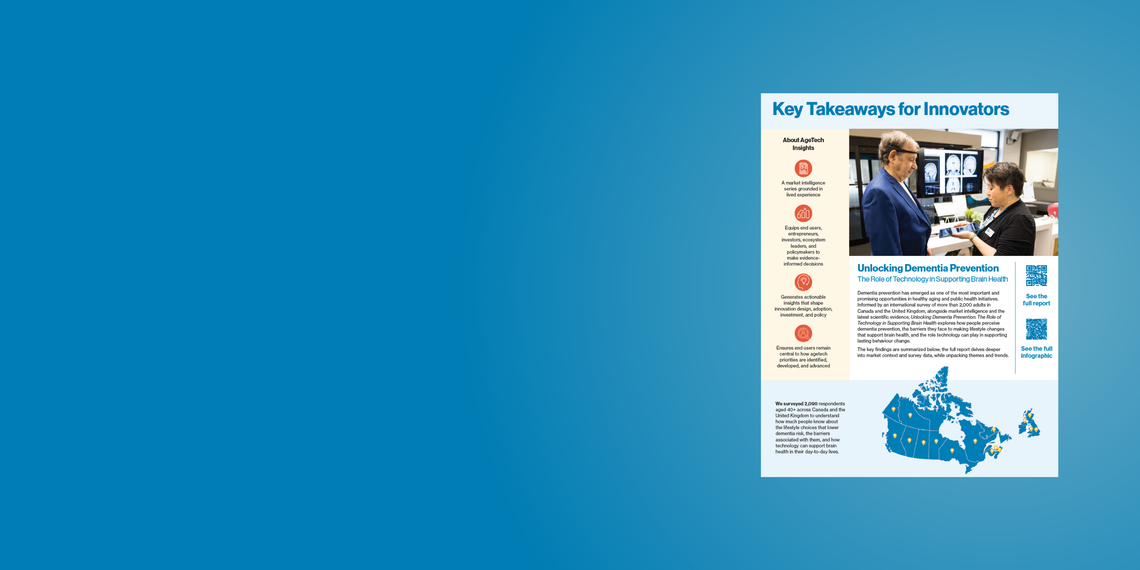
Download the key takeaways one-pager to explore how the report findings can support your work and inform solution development.
Download now

I've made many changes to maintain and improve my general health, and if they reduce the risk of dementia, that's also a strong motivation.
Survey respondent
Key Takeaways for Policymakers
Below is a high-level summary of key takeaways for policymakers. To dive deeper, download the full report.
-
Strengthen primary care as the foundation for dementia prevention
Unlike physical activity or social engagement, managing chronic health conditions and mental health depends heavily on trusted medical guidance. Survey respondents frequently reported uncertainty about which actions are effective in navigating these conditions, alongside difficulty accessing expert medical advice.
Policy opportunities:
Introduce complementary approaches, such as remote care monitoring, virtual care, and team-based care models, alongside continued investment in primary care capacity to increase access to trusted information amid shortages of medical professionals.
Invest in policies that support both primary care capacity and alternative delivery models—rather than treating them as separate tracks—to make dementia risk reduction guidance accessible at scale.
-
Develop public health campaigns and policies that support dementia prevention across the life course
Canadians are increasingly aware that behaviour changes in midlife can have dementia prevention benefits in later years. Policies should reflect this lifespan approach, rather than exclusively supporting older persons.
Policy opportunities:
Develop initiatives grounded in scientific evidence (e.g., the 2024 update of the Lancet Standing Commission for Dementia Prevention, Intervention and Care and the World Health Organization’s 2026 guidelines on reducing the risk of dementia) that help young and middle-aged adults find communities for meaningful social connections, engage in exercise, and manage cardiovascular and/or mental health conditions for long-term dementia prevention benefits.
E.g., workplace mental health benefits, community infrastructure that supports physical activity and social connection, and midlife cardiovascular screening programs could deliver long-term public health and economic returns by reducing dementia prevalence over time.
-
Improve equitable access to hearing and vision care as dementia prevention strategies
Our findings demonstrate that hearing and vision care are two of the least recognized – but still scientifically meaningful – potentially modifiable risk factors for dementia. Almost half of respondents cited cost as the primary barrier to accessing these supports, underscoring affordability and access as the key obstacles preventing people from addressing them.
Policy opportunities:
Consider expanding public or insurance coverage for hearing aids and vision care (e.g., subsidies, means-tested coverage, and/or inclusion in provincial health benefit plans) to remove the cost barrier to care that improves quality of life and supports dementia prevention long-term.
-
Support responsible adoption of digital health and AI through evidence and trust
The report finds widespread use of digital technologies among older persons and growing use of AI systems, such as chatbots. However, trust in AI-generated health advice remains low.
Policy opportunities:
Establish regulatory frameworks, clinical validation standards, and clear disclosure policies for when AI is used in health interactions.
Ensure digital tools for brain health are developed and implemented into practice safely, with trust and privacy as foundational principles.

Insights to Inform Policy
Download the key takeaways one-pager to explore how the report findings can support your work and inform policy.
Download now
Overall Recommendations
Below is a high-level summary of the overall report recommendations. To dive deeper, download the full report.
-
![]()
Embed dementia prevention into existing strategies
Position dementia prevention within broader wellness and aging-in-place strategies, rather than as a standalone proposition. Solutions may gain traction more easily when they are framed with the top brain health motivators in mind: helping people stay active, socially engaged, and independent later in life, while also contributing to lower, long-term dementia risk. -
![]()
Address under-recognized dementia prevention factors
Hearing and vision loss, depression, smoking, alcohol use, and exposure to air pollution all point to areas where the gap between scientific relevance and public understanding remains substantial. Innovators in this space can thus benefit from supporting broader public health campaigns to raise awareness of these modifiable risk factors for dementia. Capturing this opportunity, however, will require more than just awareness building; it will depend on making solutions affordable, trusted, and easy to integrate into existing care pathways and daily life. -
![]()
Match solution design to specific dementia prevention-related barriers
Current barriers uncovered in this report include:
Motivational barriers, such as those related to increasing physical activity and social engagement, call for reinforcement and habit-forming experiences.
Cost-related barriers, such as those related to sensory care and correction, call for new delivery models, market innovations, pricing strategies, and reimbursement pathways.
Guidance-intensive challenges, such as managing chronic and mental health conditions, call for trusted information, coaching, and stronger connections to expert medical support.



Access the full report
Interested in learning more about dementia prevention, the challenges people face in adopting behaviours that support their brain health, and the evolving role that new technologies can play in helping to bridge the gap between knowledge and action? Download the new AgeTech Insights report now!
ownload the full report for our detailed findings, discussion, and recommendations.